


Trick or Treat? How to Spot a Real Jewelry Deal Online
Every gift season and every wedding planning spreadsheet brings the same question: is this online jewelry deal real? A gold chain priced far below its neighbors, a diamond listed with a dramatic markdown, or a "solid gold" label that turns out to be a thin coating all look convincing on a screen. If you are learning how to buy jewelry online, the tricks are predictable, and so are the checks that expose them. As a family-owned manufacturer in New York that has spent 22 years making jewelry in-house, we see these patterns from the production side. Here is how to separate a genuine bargain from a trick.
Table of Contents
- Quick Takeaways
- Decoding Metal Stamps and Plating Claims
- Gemstone Certificates and What They Prove
- Lab Created Versus Natural Stones
- Pricing Tricks: Fake Discounts and Inflated Markdowns
- Three Ways to Verify a Piece Before You Pay
- Return Policies, Warranties and Lifetime Care
- Red Flags in Listings and Checkout Pages
- Frequently Asked Questions
- References
Quick Takeaways
| Key Insight | Explanation |
|---|---|
| Read the karat stamp first | 14K and 18K are common solid gold marks. 'Gold-plated' and 'gold-filled' describe a thin layer over a base metal, not solid gold. |
| Carat weight alone proves nothing | Two diamonds of equal carat weight can differ widely in value because clarity, color and cut change the price. |
| Ask for the report number | A certificate from a recognized lab is only useful if its number matches the exact stone you are buying. |
| Lab created is fine, hidden is not | Lab created diamonds are real diamonds sold at lower prices. The deception is calling them natural or leaving the label out. |
| Treat 'original price' as a claim to test | Compare the listed original price against the actual materials and weights before trusting a markdown. |
| Read the return policy before the cart | A deal without a clear return window, inspection right and warranty is a bet you cannot undo. |
Decoding Metal Stamps and Plating Claims
The metal stamp is the fastest way to check a piece, and it is where many cheap listings quietly fall apart. Gold is usually stamped with its karat mark, such as 10K, 14K, 18K or 24K. In fine jewelry, 14K is the most common choice because it balances gold content with durability, which is why our gold rings and pendants are made in solid 14k gold.
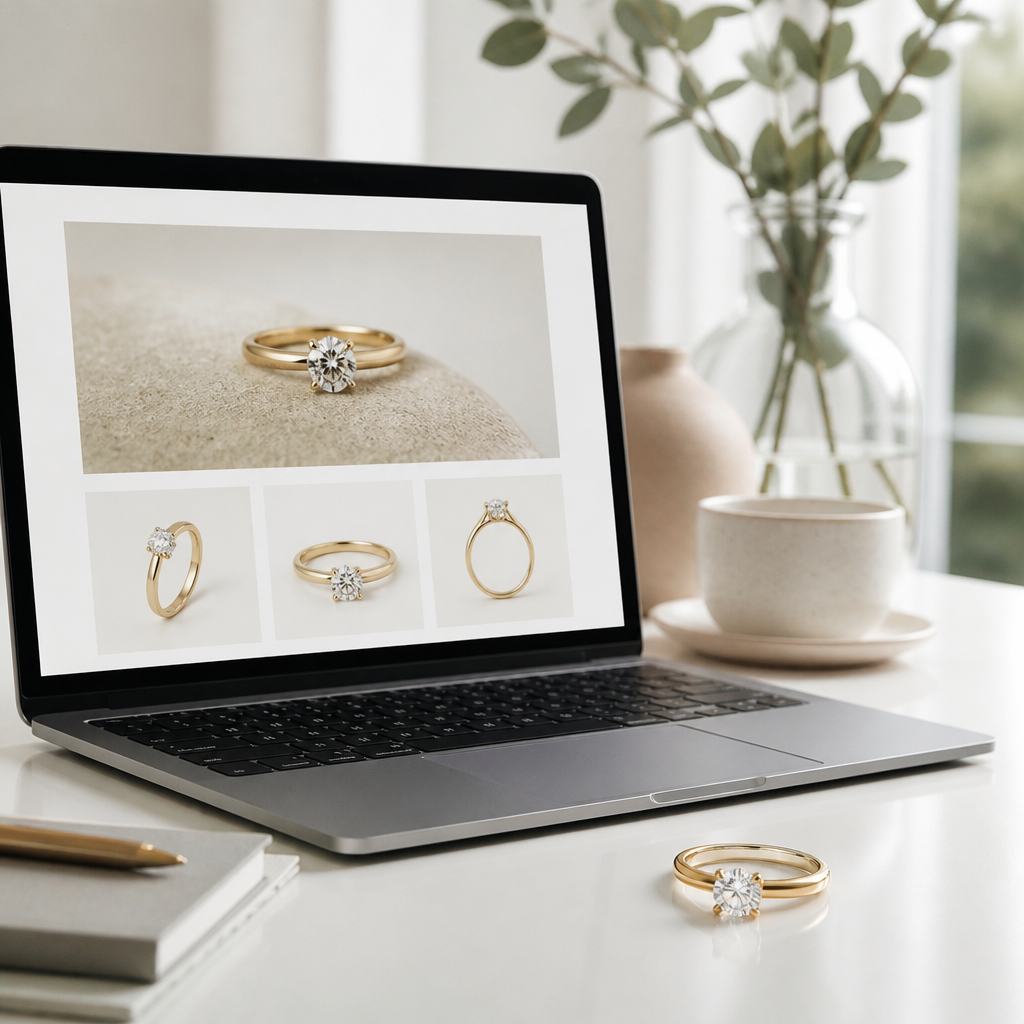
Pure 24K gold is too soft for everyday wear, so most jewelry is alloyed with other metals. That is normal. What is not normal is a listing that says 'gold' with no karat at all, or one that shows a stamp in the photo but says nothing about the weight or metal in the description.
What a Karat Stamp Does Not Tell You
A stamp tells you the gold content of the metal, not the quality of the craftsmanship or the stones. A 14K ring can still have a loose prong, a thin shank or a setting that will fail within a year. Check whether the description gives the metal type and weight for the whole piece, not just a number visible in the photo. Sterling silver should be marked 925, and platinum is typically marked PLAT or 950.
Plating Language That Hides a Cheap Base
Words like 'gold tone', 'gold finish' and 'gold-plated' are legal ways of saying the piece is not solid gold. Gold-filled pieces carry a thicker layer than plating, but the core is still a base metal. Vermeil is a thin layer of gold over sterling silver. None of these terms is a scam on its own, but a price that matches solid gold while the listing uses this language is the trick.
Pro tip: Search the listing for 'plated', 'filled', 'tone' and 'vermeil' before you read anything else. If you find one of these words and the price looks like solid gold, the price is the problem.
Gemstone Certificates and What They Prove
A gemstone certificate is the closest thing an online buyer has to proof of what is actually in the setting. Reputable sellers provide certificates for diamonds from a recognized gemological institute, and the GIA is the name most buyers should recognize. A certificate describes a stone, but only if it belongs to the stone you are buying. In practice, that is where the trick usually happens.
Reading the Four Cs Without Being Fooled
GIA's own guidance on diamond quality makes a point that matters for shoppers: two diamonds of equal carat weight can have very different values and prices, depending on clarity, color and cut. A listing that leads with a big carat number and hides the other factors is selling the easiest number to inflate. Ask for the clarity, color and cut grades in writing, then compare them with the price.
Matching a Report Number to a Specific Stone
Every certificate has a report number, and that number should trace back to one exact stone. Ask the seller to confirm it before you pay, then check that the measurements and grades match the listing. A certificate photographed from a different diamond, or a number that does not appear on the lab's own lookup where one is available, is a red flag. A loose stone with no report number is a bigger one.
Using a Loupe Without Overreading It
A jeweler's loupe lets you examine a stone up close. Real diamonds usually show small natural imperfections, while cubic zirconia often looks too clean under magnification. A loupe is not a verdict, though. Many natural diamonds look clean to the naked eye, and some simulants are cut well enough to fool a quick glance. Use the loupe to spot obvious problems, then rely on the certificate for the rest.
Pro tip: Ask the seller for a clear, close photo of the stone with the report number visible, or for the number itself so you can check it on the lab's site. Sellers with nothing to hide usually send this without a fuss.
Lab Created Versus Natural Stones
Lab created diamonds are real diamonds. They share the same crystal structure and optical behavior as mined stones, but they are grown in controlled conditions and sell for less. That makes them excellent value for bridal and everyday pieces, which is why we set brilliant lab created diamonds in our engagement rings, studs and tennis bracelets. The trick is never the stone itself. It is the label.
What Honest Disclosure Looks Like
An honest listing says 'lab created diamond' in the title, the specifications and the certificate. It names the carat weight, the metal and the grades without burying them. If you have to hunt for the word 'lab' or find it only in a footnote, the seller is counting on you to assume the stone is mined. Ask directly, and expect a plain answer.
Simulants Sold Under Diamond Language
Lab created diamonds are not the same as simulants. Cubic zirconia, moissanite and similar materials look diamond-like, but they are different materials. None of them is a fraud by default, since they are sold as lower-cost alternatives. The problem appears when a simulant is titled as a diamond or priced close to one. Check what the material is named in the listing, then match the price to that material.
Pricing Tricks: Fake Discounts and Inflated Markdowns
The oldest trick in jewelry is the discount that never happened. A listing shows a crossed-out price, a bold '70% off' badge and a countdown timer, and the buyer assumes they are looking at a bargain. In practice, the original price was often set high just to make the reduction look large. Be wary of 'huge discounts' on pieces you cannot see in person, because the markdown is the easiest part of the price to invent.
Honest pricing works differently. It starts from the cost of the metal, the stones and the labor, then adds a clear margin. Without traditional retail markups, a fair price should be easy to explain, and the materials should justify it. If a 14K gold ring is marked down from an 'original' price that no one ever charged, the discount is not a deal.
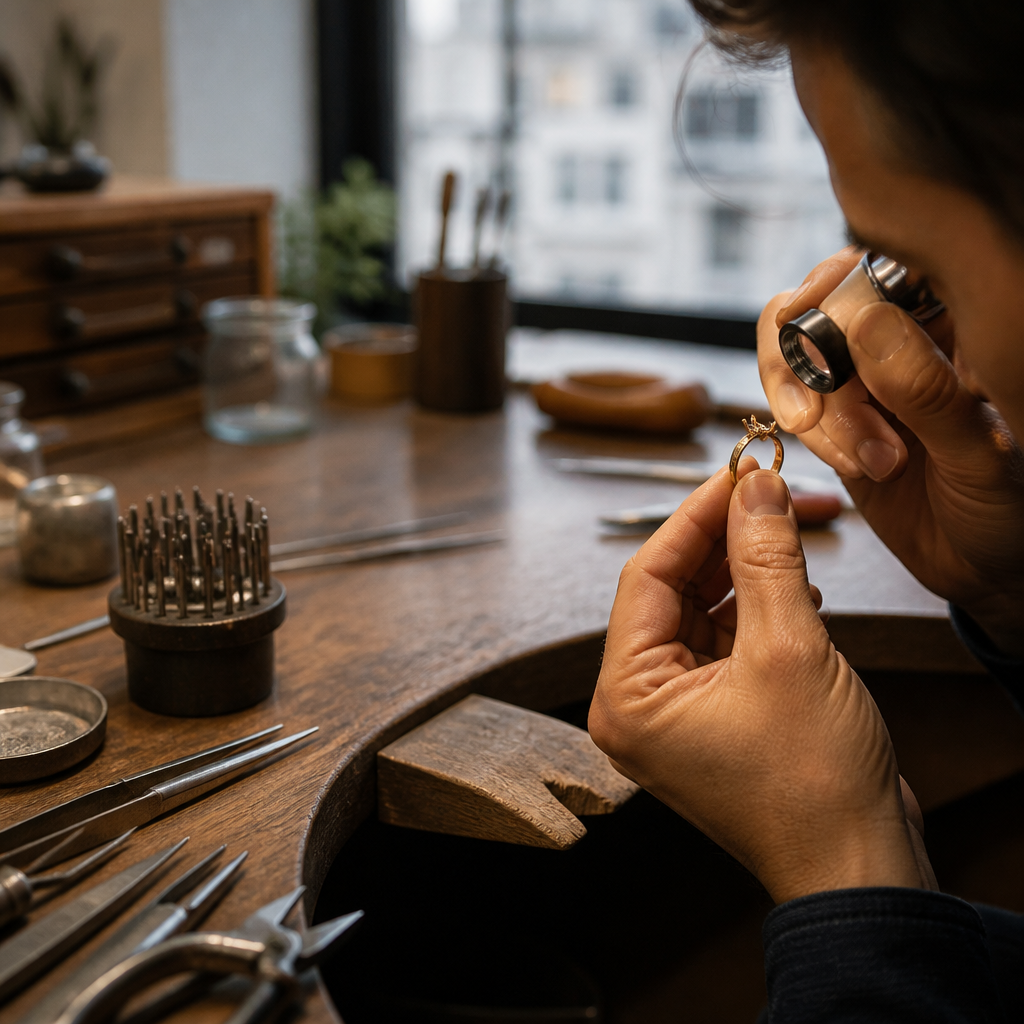
Spotting an Invented Original Price
Search for the same design, metal and stone specification elsewhere. If the crossed-out price appears on no other listing and the seller shows no sales history for that piece, the anchor is probably decorative. Also check how long the 'sale' has run. A permanent sale is a regular price wearing a costume.
Comparing Weight, Metal and Stone Specs
A fair price comparison needs like-for-like specs. Line up the metal, the karat, the weight in grams, the stone type and the stone size. Two pendants can look identical in a photo and still differ by a full karat of gold or a few hundredths of a carat. Price the specification, not the picture. This takes a few minutes and removes most of the pressure a flash sale creates.
Three Ways to Verify a Piece Before You Pay
No single check settles whether a deal is real. The strongest buyers combine three methods, and each one catches a different kind of trick. The table below compares them, and the paragraphs after it explain how to use them in order.
| Verification Method | What It Catches | Limitation |
|---|---|---|
| Spec and stamp review | Plating disguised as solid metal, missing karat marks, vague material descriptions | Cannot confirm stone quality or prove that a stamp is accurate |
| Certificate lookup | Mismatched stones, unverifiable grades, reports that belong to a different diamond | Covers only certified stones and does not judge the setting or craftsmanship |
| Independent appraisal | Overstated value, inaccurate descriptions, weak construction | Costs money and depends on the appraiser's scope and qualifications |
Start with the spec review, since it costs nothing and eliminates the weakest listings. Then run the certificate check on any stone you are paying for. Save the independent appraisal for high-value pieces, or for any purchase you cannot inspect before it arrives.
Preparing for an Independent Appraisal
GIA's appraisal guidance recommends discussing exactly what you want before an appraiser documents and values a piece, and asking whether they can provide the specific appraisal you need. Bring the listing, the report number and any receipts. An appraisal is only useful if it answers the question you actually have, such as insurance replacement value or confirmation of a stone grade.
Where Certificates Stop Being Enough
A certificate describes a stone, not the ring that holds it. Prongs, solder joints and the shank still need a physical check. If the setting feels loose, shows uneven stone seating or looks rushed, a certificate will not fix it. Most buyers skip this step, and it is the reason we treat the setting as part of the quality, not an afterthought.
Return Policies, Warranties and Lifetime Care
A good deal should survive the return window. Before you check out, find the return policy, the inspection rights and the warranty terms. A clear return window matters most for jewelry, because sizing, finish and sparkle are hard to judge from a screen. If a seller makes the policy hard to find, assume it is hard to use.
Warranties also show how a maker expects a piece to age. Ask what the warranty covers, whether it includes prong checks and resizing, and whether repairs are handled in-house or sent to a third party. Those answers reveal more about construction than any marketing line.
A deal you cannot inspect, return or repair is a guess with a discount attached.
Questions to Ask Before Checkout
Ask five questions in writing: what metal and karat the piece is, whether the stones are natural or lab created, what the report number is, what the return window covers, and who handles repairs. A seller who answers quickly and specifically is usually worth trusting. A seller who answers vaguely has already given you the answer you needed.
Why Aftercare Reveals Quality
Our family has been making jewelry for three generations, and the pieces that come back for care are the honest test of a design. A lifetime of care means a ring can be checked, cleaned, resized or repaired long after the sale. When a seller offers no aftercare at all, you are buying a piece that may be hard to maintain, and that cost usually shows up later.
Pro tip: Photograph the item, the stamp and the packing slip when your order arrives. If the piece differs from the listing, those images let you start a return or warranty claim without an argument.
Red Flags in Listings and Checkout Pages
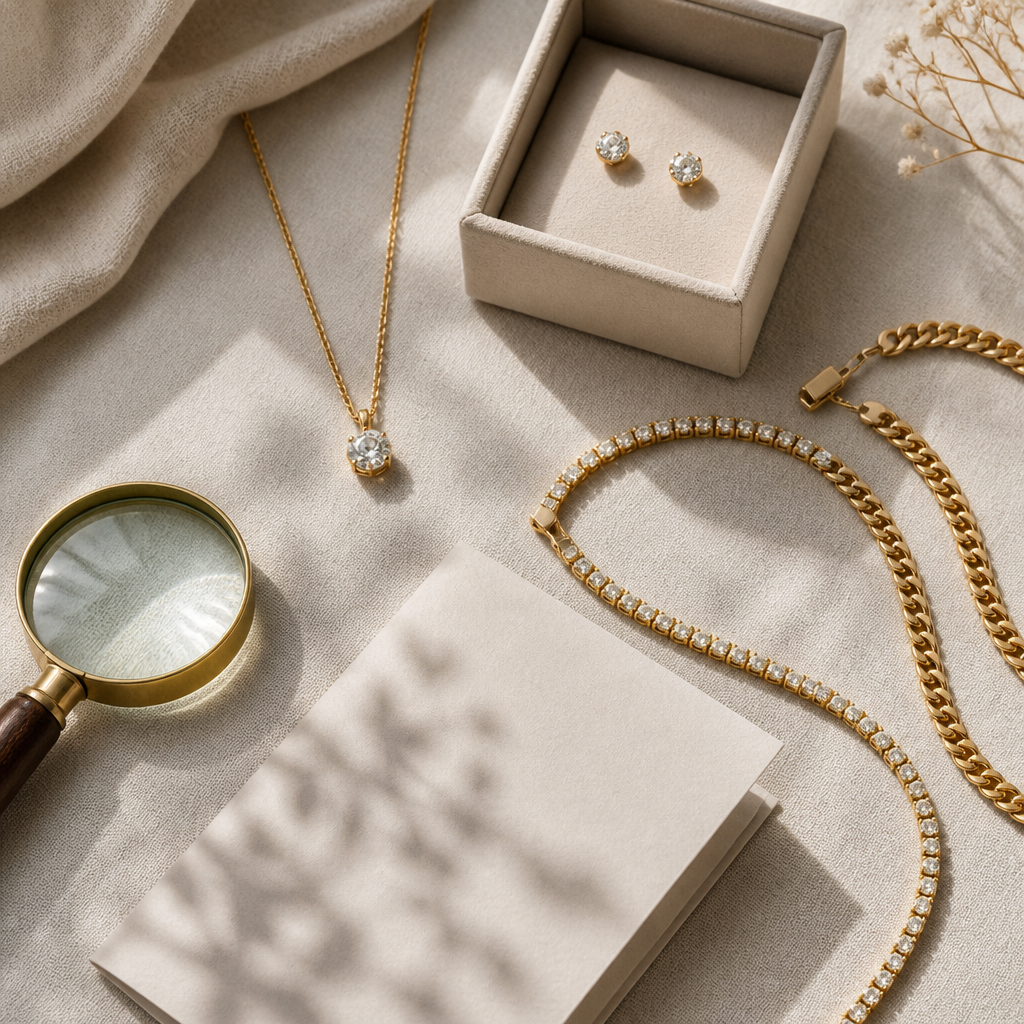
Scams rarely announce themselves. They show up as small, repeated gaps in the listing: a ring photographed on a stock hand with no close-up of the setting, a description that never states the metal, or reviews that all sound the same. Each gap is minor on its own. Together, they describe a seller who expects you not to look closely.
Listing Language That Should Make You Pause
Watch for phrases like 'precious metal', 'luxury finish', 'authentic style' and 'inspired by' when a listing is meant to describe solid gold or a genuine stone. These phrases describe a look, not a material. Be cautious of stone sizes shown only as a total weight with no per-stone detail, because that can hide how many small stones are actually in the piece.
Checkout Signals That Matter
At checkout, look for a visible return policy, a physical business address and a way to reach a real person about a specific piece. Countdown timers, 'only two left' messages and pressure to pay before a sale ends are sales tactics, not product information. A genuine maker has nothing to gain by rushing you.
Frequently Asked Questions
How do I know if gold is real when buying online?
Check for a karat mark such as 10K, 14K, 18K or 24K in the listing and the photo, and confirm the metal is described as solid gold. Words like gold-plated, gold-filled, gold tone and vermeil mean the piece has a thin layer of gold, or none at all, over a base metal.
Is a lab created diamond a real diamond?
Yes, a lab created diamond is a real diamond with the same chemical and optical properties as a mined one. It is priced lower, so the honest question is whether the seller labels it clearly and prices it accordingly.
What should I do if a jewelry discount looks too big?
Search for the same piece with the same metal, weight and stone specifications elsewhere. If the crossed-out original price appears nowhere else, treat the discount as unproven and judge the piece by its materials instead.
Do I need an independent appraisal for every purchase?
No. A spec review and a certificate check cover most purchases. An independent appraisal makes sense for higher-value pieces, for insurance purposes, or when the piece cannot be inspected before it arrives.
What is the most important thing to check before paying?
Confirm the return policy, the warranty terms and the report number for any certified stone. Those three details tell you whether you can verify the piece after delivery and fix it if something is wrong.
Tell us about the last jewelry listing that made you pause, and which detail gave away the trick.
References

- Choosing a selection results in a full page refresh.
- Opens in a new window.