


History of Engagement Rings: From Tradition to Love Story
Ask most couples when the diamond engagement ring started, and you will hear a confident answer that falls apart once you dig into it. The history of engagement rings is older, stranger, and more practical than the romantic story most of us were told. Rings began as signals of agreements and ownership long before they became declarations of love. Understanding that path explains why diamonds, metals, and settings look the way they do today, and it helps you make a choice you will still be happy with after the wedding photos are framed.
Table of Contents
- Quick Takeaways
- Roman Origins: Rings as Contracts, Not Romance
- Medieval and Renaissance Engagement Rings
- Why Diamonds Became the Symbol
- Twentieth Century Diamond Rings and Mass Marketing
- Lab-Created Diamonds and the Modern Ring
- Custom Engagement Rings and Wedding Bands
- Bridal Jewelry History Beyond the Engagement Ring
- Choosing a Ring With History in Mind
- Frequently Asked Questions
- References
Quick Takeaways
| Key Insight | Explanation |
|---|---|
| Rings predate diamonds by centuries | Engagement rings have been common in Western countries since at least the Roman Empire, while diamonds only began appearing in them during the Renaissance. |
| Early rings worked as agreements first | Roman-era accounts connect the ring to obedience, legal contracts, and ownership, so the romantic meaning came later. |
| The diamond symbol was built over generations | Its appeal rested on hardness, light, and rarity, then on twentieth century advertising that made it the default. |
| Lab-created stones are still diamonds | They share the same optical, chemical, and physical properties as natural diamonds, so compare the cut, color, clarity, and carat weight of the exact stone. |
| Setting decides long-term wear | A secure prong or bezel in solid 14k gold matters more for daily wear than a dramatic profile that catches on sweaters. |
| Custom design is the modern extension of the tradition | Build the ring around a real detail from your story, then request a wax or digital model before production begins. |
Roman Origins: Rings as Contracts, Not Romance
Engagement rings have been common in Western countries since at least the time of the Roman Empire. That is the most solid starting point we have, and it already overturns the idea that the ring was invented as a romantic gesture. Accounts of the early tradition describe rings that marked a promise, a transfer of obligation, or a claim over a person's future, which tells you more about legal and family structures of the period than about affection.
Some historians place the earliest engagement rings in ancient Rome around 200 B.C., where they reportedly symbolized obedience or a legal contract. Other accounts tie the practice to ancient Egypt and to the idea of ownership. The dating varies between sources, so treat any single date as a working estimate. What the sources agree on is the function: the ring stood for an agreement between families.
What a Roman Betrothal Ring Actually Did
In practice, a betrothal ring worked like a visible receipt. It told the community that a match had been arranged and that both parties were bound to follow through. Many were simple bands, and the material mattered less than the fact that the ring was worn openly and recognized by others.
This is why the tradition is more useful to understand as a social document than as a jewelry trend. The ring was a public marker, and public markers are easy to read at a glance.
Why Ownership Still Shapes the Story
Early reports describing rings as symbols of ownership in ancient Rome and Egypt explain why many modern writers find the origins uncomfortable. Yet the ring's core job, signaling commitment to people outside the couple, never disappeared. It simply shifted from property and family contracts toward mutual promises between two adults.
When we talk with couples in our New York workshop, many are surprised that the original ring was about obligation. That surprise is useful. It reminds you that the ring you choose today carries meaning you define, not meaning handed down by default.
Medieval and Renaissance Engagement Rings
Through the medieval centuries, betrothal and wedding rings grew more closely tied to church ceremony and to the idea of a formal promise. Rings were exchanged as part of agreements between families, and pairing a ring with a spoken vow became more common across Europe. The shift was gradual, and historians do not agree on a single date for it.
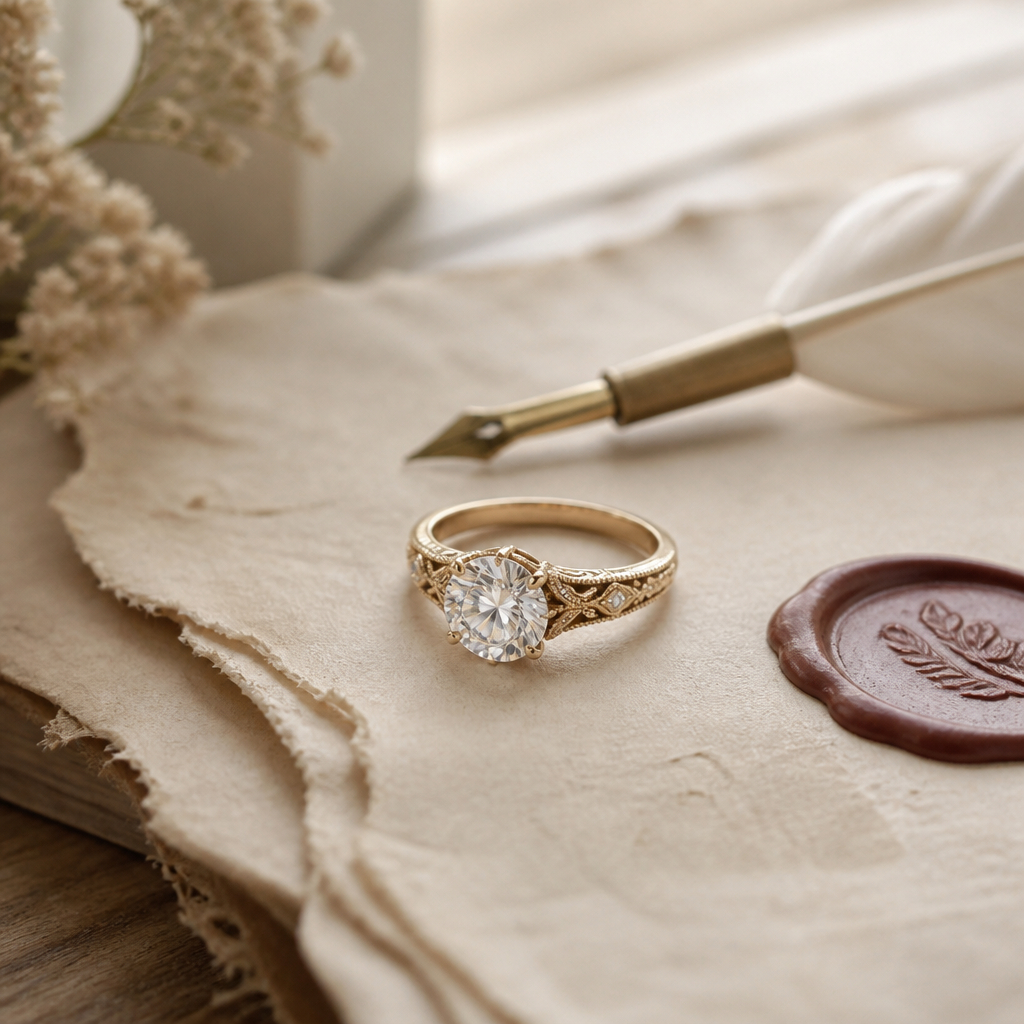
Betrothal Rings Before the Wedding
Betrothal rings were often plain or lightly engraved, and they were worn during the period between agreement and marriage. That gap could be long, and the ring kept the agreement visible while families arranged the details. Gold and silver were common choices, valued for durability and for the status they signaled.
If you are planning a long engagement today, the old logic still holds. A ring worn every day needs to survive housework, travel, and years of handling, so it should be chosen with that life in mind.
When Diamonds Entered the Picture
The ring's material changed more slowly than its meaning. Diamonds began to feature in engagement rings during the Renaissance, when they were a small group of luxury stones available mainly to the wealthy. Diamonds were difficult to cut and expensive to source, so early diamond rings signaled wealth as much as devotion.
This is the first point where the modern ring starts to look familiar. A stone that was once a status object became attached to the promise itself, and that link has never fully been broken.
Why Diamonds Became the Symbol
A diamond's appeal has always rested on a few physical traits. It is extremely hard, it returns a great deal of light when cut well, and it keeps its surface for a long time. Those qualities made it a natural metaphor for a promise meant to endure, though the metaphor was built over generations rather than discovered in a single moment.
A ring does not make a promise last. The promise is what lasts, and the stone was simply the most convincing symbol people had for it.
Hardness, Light, and Rarity
Diamond is the hardest common natural material, which made it practical for jewelry meant for daily wear. A well-cut stone reflects a lot of light, so it looks striking even in modest sizes. Rarity added the final layer, because owning a diamond signaled that you could afford something most people could not.
The Gap Between Symbol and Budget
The diamond symbol encouraged couples to spend more than they planned. Rule-of-thumb budgets for engagement rings circulate widely, but most of them are more marketing than math. A ring should fit your finances, your timeline, and your taste, and the symbol should not make that decision for you.
Pro tip: Before you set a budget, decide what the ring needs to do in daily life. A low-profile setting in 14k gold can sit more securely during everyday wear than a high-set stone, and it often leaves more room in the budget for quality.
Twentieth Century Diamond Rings and Mass Marketing
By the twentieth century, the diamond engagement ring had become the default in many Western markets, and advertising played a major role in that shift. Campaigns linked diamonds with romance and permanence in ways that were easy to remember and repeat. The result was a ring many couples chose because it was expected, not because they had compared options.
Diamonds also became available across more income levels as cutting methods and retail networks matured. Smaller stones on modest bands became common, which spread the tradition beyond the wealthiest families.
The Solitaire Becomes the Standard
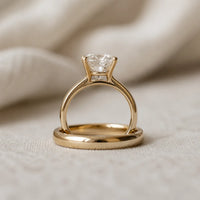
The single stone in a simple setting, known as a solitaire, is what most people picture when they hear the phrase engagement ring. Its popularity comes from clarity: one stone draws the eye, and the setting stays out of the way. Solitaires still appear in many of our custom orders, though couples often add side stones or change the metal.
What Changed for Buyers
Buyers gained choices, but they also inherited a set of assumptions. Many people accept a standard size or cut without asking what their partner actually wants. A better approach is to treat the ring as a design decision, starting with lifestyle, hand shape, and how often the ring will be worn.
Lab-Created Diamonds and the Modern Ring
The most significant recent change is that couples can now choose lab-created diamonds with the same basic properties as mined stones. Lab-created diamonds have the same optical, chemical, and physical properties as diamonds grown naturally beneath the earth's surface. That moves the decision from whether a stone is real to what you value most in the stone.
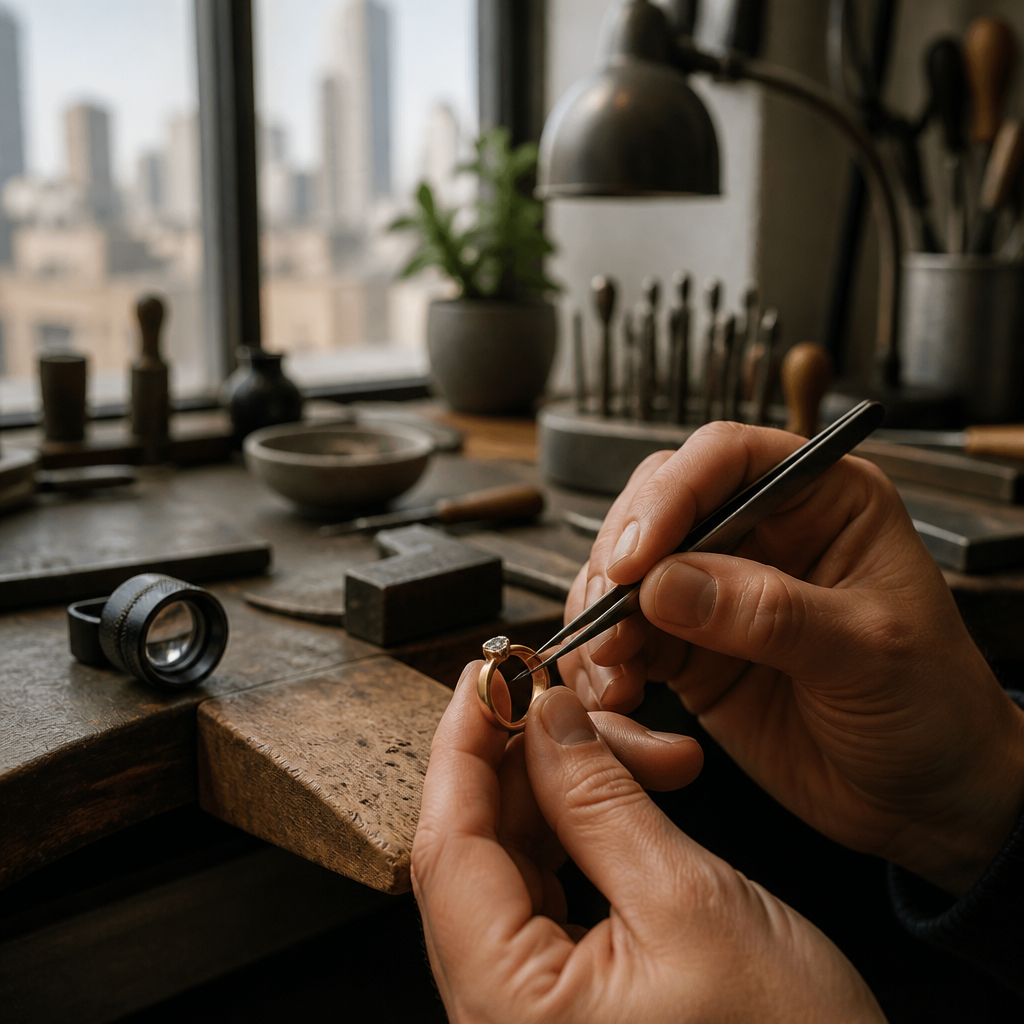
What Lab-Created Actually Means
Lab-created diamonds are grown in controlled environments rather than formed over geological time. The origin is the main difference for most buyers. Calling them fake is inaccurate, because they have the same crystal structure as mined diamonds.
Comparing Value Without Guesswork
Price gaps between lab-created and mined stones are often large. Percentage savings circulate widely online, but they usually come from sellers or general estimates that do not match the stone you are considering. Compare the cut, color, clarity, and carat weight of the exact stones, and ask for a grading report where one is available.
Our IGI certified studs follow the same logic. The certificate tells you what the stone is, so you can compare on specifications rather than on marketing language.
Choosing Metal and Setting
Our rings are set in solid 14k gold, which balances durability and color for everyday wear. In practice, the setting determines how well a stone survives years of knocks, so a secure prong or bezel matters more than a dramatic silhouette.
Custom Engagement Rings and Wedding Bands
The modern love story is less about following a template and more about designing one. Custom work lets couples combine tradition with personal detail, such as a stone set in a vintage-inspired mounting or a band that matches a partner's everyday ring. Our team in New York handles that process from sketch to finished piece, which is where precision metal jewelry manufacturing matters most. You can browse our full catalogue to see how existing designs are built before you start a custom project.
Custom Engagement Rings Versus Ready-Made
Ready-made rings are faster and simpler to compare. Custom engagement rings take longer, but they let you fix the details that most often disappoint couples, including finger size, band width, and the height of the setting. Ask for a wax or digital model before you commit, because changes are far cheaper at that stage than after casting.
Matching Wedding Bands
Custom wedding bands are where many couples find the most meaning, since the two rings can share a profile, finish, or small engraving. Think about how the bands sit together when both hands rest on a table. A slightly heavier band on one partner can keep both rings comfortable and stable through daily wear.
| Approach | Historical roots | Best fit today |
|---|---|---|
| Mined diamond solitaire | Follows the diamond symbol that spread through the Renaissance and later Western bridal custom | Couples who value natural origin and a traditional look |
| Lab-created diamond solitaire | Keeps the same stone and setting tradition with modern production methods | Buyers who want the same optical and physical properties with more budget flexibility |
| Custom band with a gemstone accent | Builds on the older betrothal idea of a personal, individually chosen ring | Couples who want a design that reflects their own story rather than a template |
Each option has a clear use case, and none of them is the single correct answer. The best choice is the one that matches how you will actually wear the ring.
Bridal Jewelry History Beyond the Engagement Ring
The engagement ring is only one part of bridal jewelry history. Brides have long worn earrings, necklaces, and bracelets chosen for the wedding day, often alongside family pieces passed down through generations. Those traditions shaped how couples think about jewelry as a record of a life, not only as a status marker.
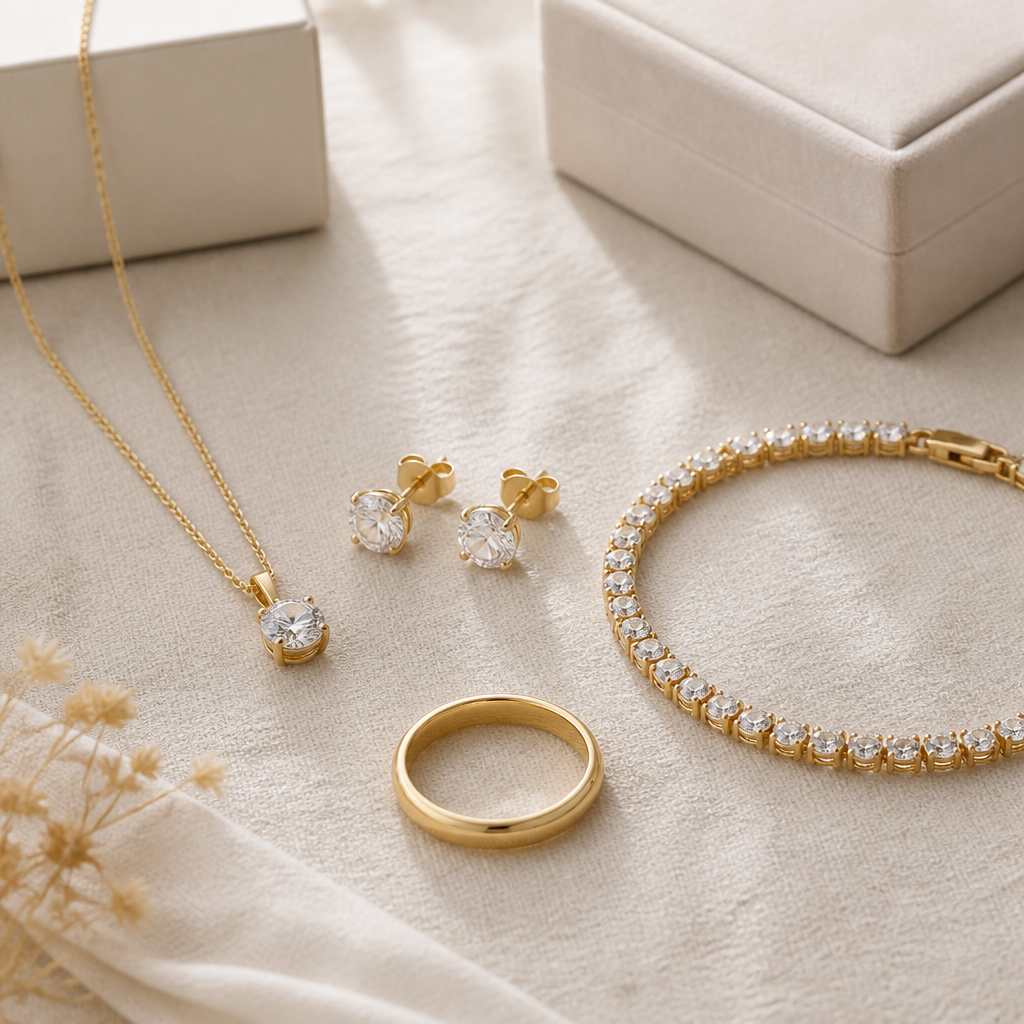
Earrings, Pendants, and the Wedding Day Set
Diamond stud earrings and solitaire pendants are common companions to a ring because they work with most necklines and hairstyles. A simple matching set creates a cohesive look in photos and keeps the day from competing with the ring. Choose pieces you can wear again, since many brides keep their jewelry for years.
Gift Jewelry and Everyday Wear
Many couples move from the engagement ring into everyday pieces, such as tennis bracelets, gold rings, and pendants given as anniversary or milestone gifts. The bridal set does not need to be the only meaningful jewelry you own. A piece that fits daily life often gets worn more than a formal one.
Pro tip: If you plan a bridal set, buy the everyday pieces in the same gold tone first so they layer well together later.
Choosing a Ring With History in Mind
Knowing where the tradition came from helps you make a better choice, not a more traditional one. The Roman idea of a ring as a commitment, the medieval idea of a formal promise, and the modern idea of a personal love story all lead to the same question: what does this ring need to say, and how long does it need to last?
Three Questions to Answer First
First, decide how the ring will be worn, because a daily ring and a special-occasion ring call for different settings. Second, decide between a mined and a lab-created stone, and compare grading details rather than headline prices. Third, decide whether the ring should follow a standard design or reflect something personal, such as a motif from your shared life.
A Practical Checklist Before You Order
Confirm ring size with a fitted sample if possible, since fingers can change with temperature and time of day. Ask about prong security, polishing, and resizing policy before you pay. In our experience, couples who check these details before ordering rarely regret the decision afterward.
Pro tip: Schedule a setting check after the first month of wear. Early loosening is far easier to fix than a lost stone.
Frequently Asked Questions
Where did the engagement ring tradition begin?
Engagement rings have been common in Western countries since at least the Roman Empire. Some historians place early examples around 200 B.C. in ancient Rome, where they reportedly symbolized obedience or a legal contract.
When did diamonds first appear in engagement rings?
Diamonds began to feature in engagement rings during the Renaissance. Before that point, the stone was often secondary or absent, and the ring's meaning rested mainly on the promise itself.
Are lab-created diamonds real diamonds?
Yes. Lab-created diamonds have the same optical, chemical, and physical properties as diamonds grown naturally beneath the earth's surface. The main difference is origin, and lab-created stones are usually priced lower than comparable mined stones.
Why do engagement ring prices vary so much between sellers?
Prices reflect stone specifications, setting work, metal, and overhead. Online percentage savings are often not comparable, so compare the same cut, color, clarity, and carat weight, and check any grading report that comes with the stone.
Should an engagement ring be custom made?
Custom work makes sense when you have a clear design idea, a specific finger size or hand shape, or a family detail to include. Ready-made rings are a good choice when you want a proven style and a simpler buying process.
We would love to hear from you: which part of the engagement ring's history surprised you most, and how did your own ring choice reflect your relationship?
References
- Choosing a selection results in a full page refresh.
- Opens in a new window.