


Solitaire Pendant Necklace: The One Piece Every Woman Needs
Most women own a drawer full of necklaces they rarely wear. The one that gets reached for every day tends to be a solitaire pendant necklace: a single stone on a fine chain, simple enough for a work meeting and quiet enough for dinner out. If you have ever wondered why that one piece looks right with everything, the answer lies in its proportions, not its price. This guide covers how to choose the stone, the chain length, and the setting, and how to layer a diamond solitaire necklace without making the look busy.
Table of Contents
- Quick Takeaways
- What a Solitaire Pendant Actually Is
- Choosing the Stone: Size, Cut, and Origin
- Chain Length and Where the Pendant Sits
- Layering Without Clutter
- Everyday Diamond Jewelry That Survives Daily Wear
- Comparing Pendant Settings
- Frequently Asked Questions
- References
Quick Takeaways
| Key Insight | Explanation |
|---|---|
| Chain length decides the look | A 16 inch chain sits at the base of the throat on most adults. An 18 inch chain drops the stone lower, which suits longer necks and deeper necklines. |
| Pick the setting for your routine | A bezel or low prong setting resists snagging on sweaters, hair, and bags. High prongs show more light but catch more often. |
| Cut matters more than carat weight | A well cut round stone returns more light than a heavier stone with weak proportions. Ask for the measurements before you buy. |
| Lab created stones stretch the budget | A lab created diamond has the same crystal structure as a mined diamond, so the money goes into a larger or cleaner stone rather than origin. |
| Layer one contrasting chain | Pair the solitaire with one plain, longer chain. Keep spacing at least an inch or two between chains to prevent tangling. |
| Check the bail before purchase | A bail that is too large lets the pendant rotate to the side. Match the bail to the chain thickness and test the hang. |
What a Solitaire Pendant Actually Is
A solitaire pendant is a single gemstone suspended from a chain, with no side stones, accents, or decorative cutouts competing for attention. That restraint is the whole point. Because the design has one focal point, it works with a white shirt, a knit sweater, a black dress, or a plain tee, and it does not need an outfit built around it.
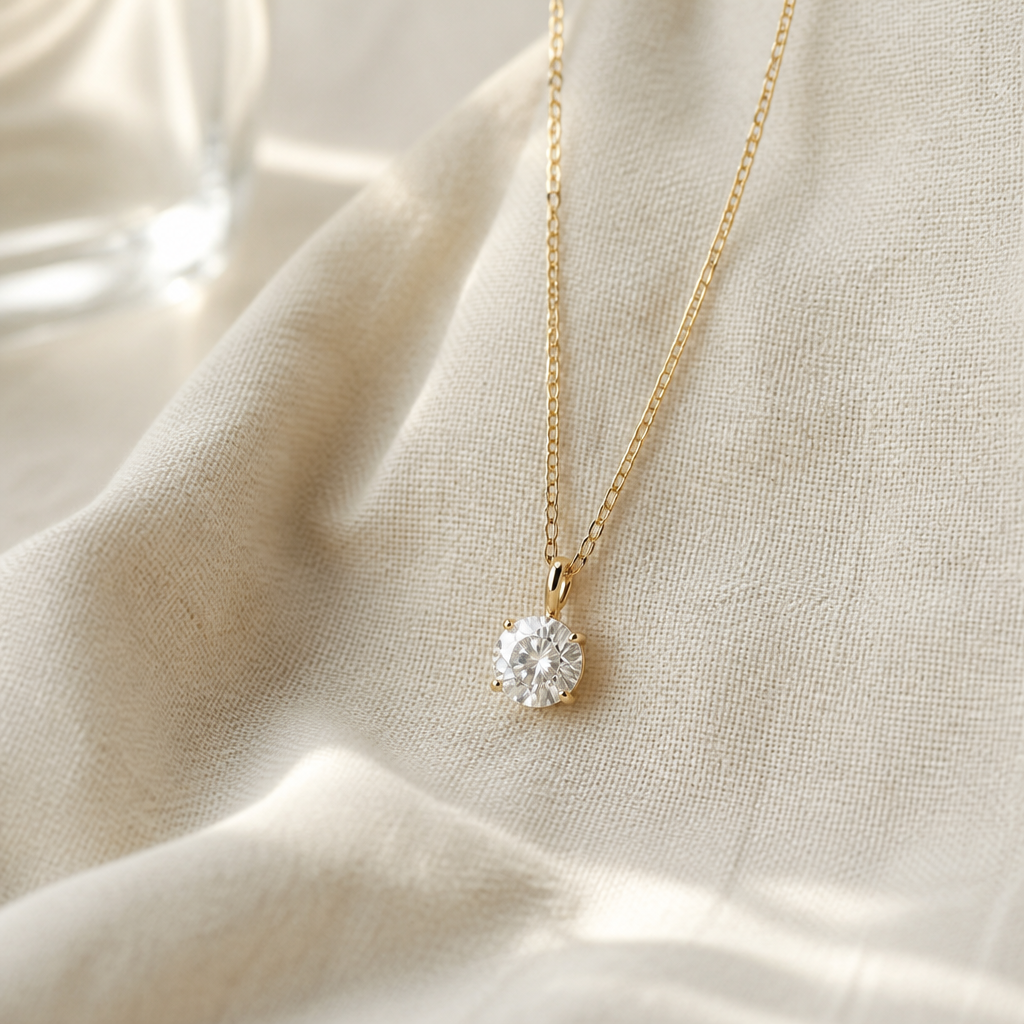
In practice, most women who buy one end up wearing it more than anything else in their jewelry box. The reason is less about sentiment and more about proportion. A single stone sits in a predictable place on the neckline, so the look reads as finished the moment you clasp it.
Why one stone works on almost every neckline
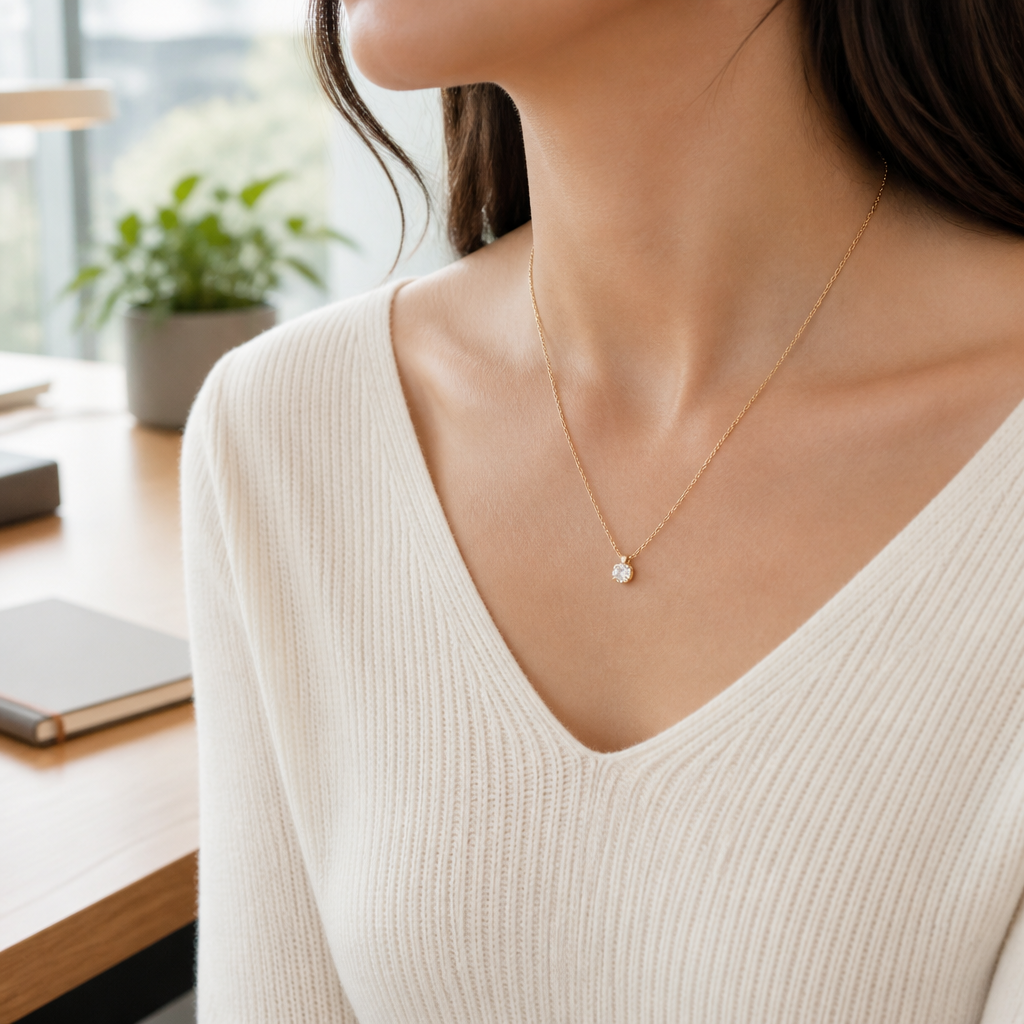
A round stone on a fine chain sits flat at the base of the throat on most necklines, which keeps the eye centered on the outfit. Scoop necks, V necks, and boat necks each frame the pendant differently, but the stone rarely fights the fabric. Square and sweetheart necklines look balanced too, as long as the chain length keeps the pendant clear of the seam.
Settings that define the silhouette
The setting controls how the pendant looks from across the room and how it behaves on your body. A four-prong setting lifts the stone and lets more light through, which suits a larger center diamond. A bezel setting wraps a thin rim of metal around the stone, which looks cleaner and sits lower, so it is less likely to catch on a sweater or a hairbrush.
Choose the setting for the life you actually live, not the one you picture in a store window.
For a daily piece, we generally steer people toward a bezel or low profile prong setting. High prongs look striking in photos, but they snag more often, and a snag on a thin chain is how a favorite pendant ends up in the bottom of a drawer.
Why a solitaire is a dependable gift
A solitaire pendant also makes a reliable gift because it fits almost any wardrobe and any taste. You do not need to know the recipient's ring size or their preferred metal to get it right. Choose a solid gold chain, a stone size that looks balanced on a neckline, and a length that is easy to adjust, and the gift works for years.
Choosing the Stone: Size, Cut, and Origin
With one stone doing all the work, carat weight and cut carry more weight than they would in a cluster design. A pendant that looks elegant at one size can look underwhelming or oversized at another. The goal is a stone that fills the space at the neckline without dominating it, and that usually means a modest size you can wear comfortably every day.
Carat weight and how it reads on the skin
Carat weight measures mass, not how big a stone looks. Two diamonds of the same weight can look noticeably different depending on cut and depth, so compare stones side by side or in person whenever you can. Customers tend to be happiest when they choose by looking at the stone on their own neckline, rather than chasing the largest number on a spec sheet.
Cut is where the sparkle comes from
The round brilliant cut is the usual choice for a solitaire because its many facets return a lot of light from a small footprint. Fancy shapes such as oval or pear can look longer and more distinctive on the neck, but they show their proportions more clearly, so a poorly cut one stands out. Judge the stone by how it returns light, not by how it looks in a single photo.
Lab created or mined: what actually differs
A lab created diamond has the same crystal structure and chemical makeup as a mined diamond. The difference is where it formed, and that difference shows up in price, not in how the stone looks on the neck. For a pendant you will wear every day, a lab created stone lets you choose a larger or cleaner center stone for the same budget. Ask for an independent grading report that lists carat, color, clarity, and cut before you commit.
Pro tip: Look at the pendant in natural daylight before you buy. Stones that seem flat under bright showroom lights often look lively by a window, and the daylight version is the one you will see every morning.
Chain Length and Where the Pendant Sits
Chain length matters more than most buyers expect. The same pendant can look refined on a 16 inch chain and crowded on a 14 inch chain, simply because the stone lands in a different place on the collarbone. Before you buy, decide where you want the stone to sit, then choose the chain to match.
The lengths that work for most people
A 16 inch chain is the most common length for a solitaire pendant, and it rests at the base of the throat on most adults. An 18 inch chain drops the stone toward the top of the sternum, which suits a longer neck or a deeper neckline. A 14 inch chain sits higher and works well when the pendant is worn alone, but it leaves little room for a second necklace underneath.
Why adjustable chains earn their place
Many chains include extra rings or an adjustable clasp, which lets you shorten or lengthen the necklace for a particular neckline. An adjustable chain is worth the small extra step if you dress for both the office and evenings, because it lets one pendant serve both looks. Check that the adjustment rings sit flush so they do not catch on fabric.
A common mistake is buying a pendant without checking the bail, the loop that connects the stone to the chain. A bail that is too wide lets the pendant spin to the side, and one that is too tight can pinch the chain and wear it down. Match the bail to the chain thickness, then check that the pendant hangs straight when you put it on.
Pro tip: Measure a necklace you already own and love, and write down its length before you shop. That one number removes most of the guesswork when you compare chains.
Layering Without Clutter
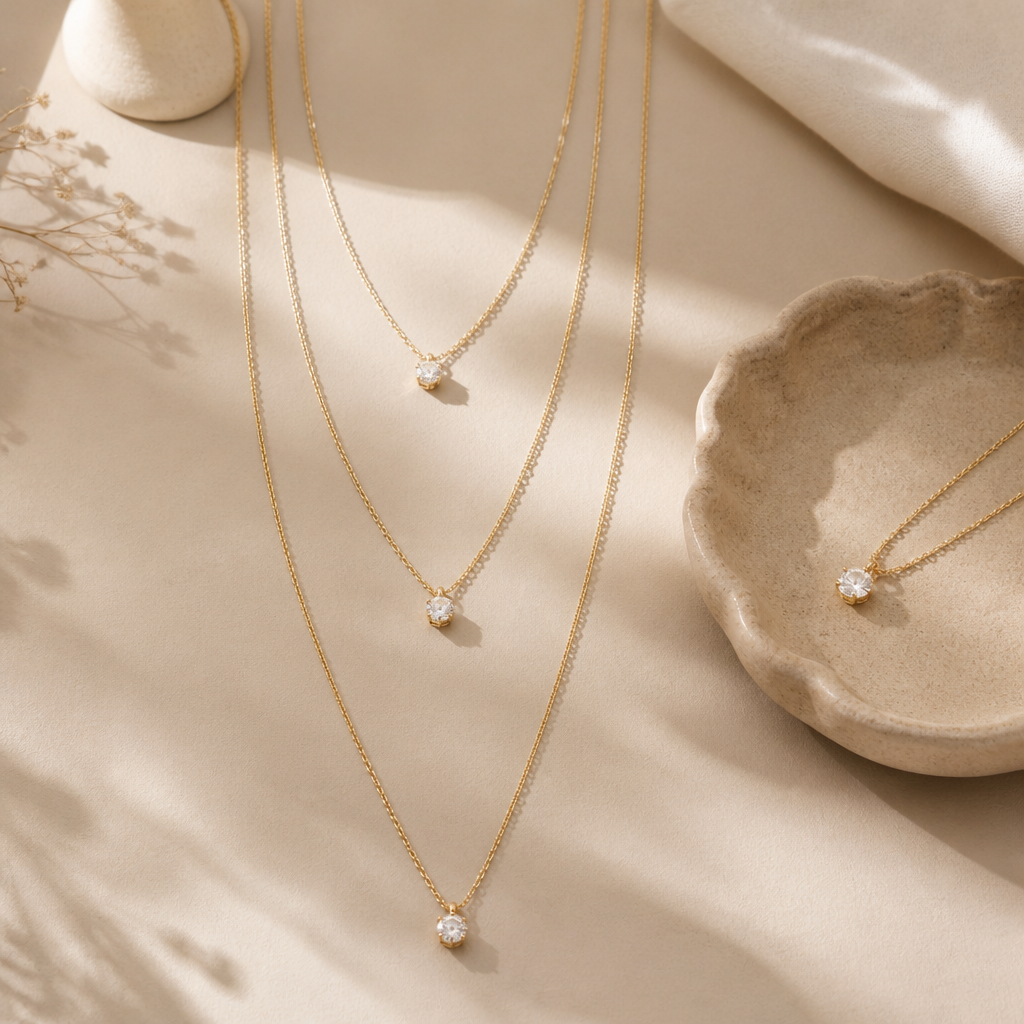
A solitaire pendant is one of the easiest pieces to layer, because the single stone gives the eye a clear anchor. The rule that matters most is spacing. Two necklaces of the same length tangle and hide each other, so the second chain should sit at least an inch or two away from the first, with a different length and a different visual weight.
Pairing the pendant with one contrasting chain
The most reliable layer is a solitaire pendant on a fine chain, paired with a plain, slightly longer chain beneath it. Smaller pieces belong on top, and larger or heavier pieces hang lower. A thin chain with a single diamond above a thicker gold rope or a simple bar necklace reads as intentional rather than accidental.
Limit the stack. Two or three necklaces look considered, while four or more tend to look busy unless every piece is very fine. For a daily routine, the pendant and one longer chain cover almost every outfit you own.
Mixing metals on purpose
Mixing yellow, rose, and white gold is no longer a faux pas, as long as the pieces have a clear reason to sit together. A practical approach is to keep the solitaire in one metal and choose a second chain in a tone that matches a ring or bracelet you already wear. Mixed metals look deliberate when you repeat one of the tones somewhere else in the look.
When you layer a diamond solitaire necklace, watch for sparkle competition. A pendant with a large stone next to a chain studded with small diamonds can look fussy. Keep the second piece plain, so the solitaire remains the one stone that draws the eye.
Everyday Diamond Jewelry That Survives Daily Wear
An everyday piece has to survive showers, gym sessions, hand lotion, and a long day at a desk. A solitaire pendant holds up well because it has few exposed edges and no fragile side stones, but how you wear it still matters. The metal and the setting do most of the protecting, so choose solid gold over plated pieces and a setting that keeps the stone secure.
Solid 14k gold is a common choice for everyday fine jewelry because it balances durability with a rich color. Higher karat gold is softer, which can show scratches faster on a fine chain. Lower karat gold is harder but looks paler over time. For most daily wear, 14k is a practical middle ground.
Where pendants take the most abuse
The stone itself is rarely the problem. The chain is. Clasps wear, jump rings open, and fine links kink when they are pulled over hair or fabric. Put the necklace on last, after hair and makeup, and take it off before the gym, swimming, or any task where the chain could catch.
Lotions, perfumes, and cleaning products leave a film that dulls both the gold and the stone, and pool water can dull the finish over time. Removing the pendant for these moments prevents most of the wear you would otherwise see after a year of constant use.
A care routine that takes two minutes
Once a month, soak the pendant for a few minutes in warm water with a drop of mild dish soap, then rinse and dry it with a soft cloth. Use a soft brush to reach the back of the setting, where lotion residue builds up and blocks light. Store it flat or hung, not tangled in a drawer with other chains.
Most people wait until the stone looks cloudy before they clean it. Cleaning on a schedule is easier, and it keeps the piece looking the way it did the day you bought it. A pendant worn daily and cared for this way can last for many years.
Comparing Pendant Settings
Choosing a setting is a trade-off between how the pendant looks in a photo and how it holds up on an ordinary weekday. Each option suits a different wearer, and the right choice depends on how often you wear the piece, what you wear it with, and whether you sleep in it. The table below compares three common options.
| Setting | Best For | Trade-off |
|---|---|---|
| Bezel | Daily wear, active routines, layering | Covers more of the stone's edge, so it shows slightly less sparkle from the side |
| Low prong (four or six prongs) | Balanced sparkle with a secure hold | Prongs can snag fabric and need periodic checks |
| High prong | Maximum light and statement evening wear | Stands tallest and catches hair and knitwear most often |
Matching the setting to your week
If your pendant moves from desk to dinner, a bezel or low prong setting gives you the best mix of security and light. If you mostly wear it for special evenings, a higher setting is a reasonable choice because it shows the stone more fully. Be honest about how often you change clothes and how you sleep, because a setting that snags every morning becomes an annoyance fast.
Checking the setting before you buy
Look at the prongs or the bezel under magnification if a loupe is available. Prongs should be smooth, evenly spaced, and firmly holding the stone with no visible gaps. Ask how the stone is secured to the bail as well, because a loose connection is far easier to fix early than after months of wear.
Frequently Asked Questions
What length is best for a solitaire pendant necklace?
Most people do well with a 16 inch chain, which rests at the base of the throat. An 18 inch chain sits a little lower and suits longer necks or deeper necklines, while 14 inches works best when the pendant is worn alone.
Is a diamond solitaire necklace practical for everyday wear?
Yes, provided you choose a bezel or low prong setting, solid gold, and a chain with a secure clasp. Remove it for heavy exercise, swimming, and cleaning with harsh products.
Are lab created diamonds real diamonds?
Yes. A lab created diamond has the same crystal structure and chemical composition as a mined diamond. The difference is origin, which affects price rather than appearance or durability.
How many necklaces can I layer with a solitaire pendant?
Two or three is the sweet spot for most outfits. Beyond that, the look can feel crowded, unless every piece is very fine and the lengths are clearly different.
Why does my pendant keep turning to the side?
The bail is usually the cause. A bail that is too large for the chain lets the pendant rotate, so check the fit and have a jeweler resize or replace it if needed.
How often should I clean a diamond pendant I wear every day?
Once a month is a reasonable schedule for a daily piece. Use warm water, mild soap, and a soft brush for the back of the setting, then dry it with a soft cloth.
Is a solitaire pendant a good gift for someone with a different style?
It usually is, because a single stone on a plain chain fits most wardrobes. Choose a length that is easy to adjust and a stone size that looks balanced, and the gift will suit both casual and formal outfits.
Tell us which chain length you reach for most often and what outfit you wear it with most, because your experience will shape the next guide we write.
We would love your feedback and any insights you would share with others. What perspective would you add?
References

- Choosing a selection results in a full page refresh.
- Opens in a new window.