


IGI Certified Diamonds: What the Certificate Tells You
Ask ten buyers what an IGI certificate means and you will likely hear ten different answers, usually some version of "it proves the diamond is real." That is only partly true. An IGI report is a grading document that describes a specific stone at a specific moment, and it tells you a great deal about the diamond's cut, color, clarity, and carat weight. It does not tell you what the stone is worth, and it does not guarantee that the setting around it is well made. Here is what IGI certified diamonds actually document, how the report compares with the GIA version many buyers have heard about, and what to check before you spend money on certified diamond studs or an engagement ring.
Table of Contents
- Quick Takeaways
- What IGI Certification Actually Covers
- Why Certification Matters at the Point of Sale
- IGI vs GIA: How the Reports Differ
- Certified Diamond Studs: What to Check
- Common Mistakes With Diamond Certificates
- Certification and Custom Pieces
- Frequently Asked Questions
- References
Quick Takeaways
| Key Insight | Explanation |
|---|---|
| An IGI report grades the diamond, not the piece | The report covers cut, color, clarity, and carat weight. Metal quality, prong security, and finish are separate questions you need to check yourself. |
| Confirm the report number with the issuing lab | Before you pay, check the report number directly with the laboratory. A photocopy or screenshot from the seller is not independent proof. |
| Make sure the origin is stated on the report | Natural and lab created stones need different descriptions. If the origin is missing or vague, you will struggle to resell or insure the stone later. |
| A report is not an appraisal | The report describes the stone. A replacement or insurance value requires a separate appraisal from a qualified appraiser. |
| Check the gold as carefully as the stone | Solid 14k gold should carry a clear stamp, and the invoice should describe it as solid 14k rather than plated. |
| GIA reports are usually requested on loose stones | GIA issues grading reports for unmounted stones, so a GIA report for a finished ring has to be arranged before the setting is made. |
| Custom work needs the paperwork first | Share the stone's report and measurements with your jeweler before the design is final, so the setting fits the actual diamond. |
What IGI Certification Actually Covers
The International Gemological Institute, known as IGI, issues grading reports for diamonds and other gemstones. For diamonds, its reports evaluate the internationally recognized 4Cs: cut, clarity, color, and carat weight. Those four factors drive most of a diamond's beauty and most of its price, so the report gives you a common language for comparing one stone against another.
How the IGI screening process begins
Before anyone measures a stone, IGI starts with a screening step that establishes how the diamond was formed. This is the point where a natural diamond and a laboratory grown diamond are separated, and the answer shapes everything that follows. In practice, a buyer should see the origin stated clearly on the report rather than inferred from a product name or a marketing phrase.
Once the origin is settled, the grading team turns to the 4Cs. The report records what was observed, and it is meant to be read alongside the stone it describes. That tie between paper and stone is the whole value of the document, which is why the details in the next subsection matter so much.
The 4Cs as they appear on an IGI report
Cut is the factor that most affects brilliance, and it is the one buyers most often misread. A well proportioned stone returns light efficiently, while a poorly proportioned one can look dull even if its other grades are strong. When you read the cut line, treat it as a statement about light performance, not a decorative label.
Color and clarity describe the appearance and the internal characteristics of the stone. Carat weight is the simplest of the four because it measures mass, but it is also the factor sellers most often use to make a stone sound more valuable than it is. A larger stone with weaker color and cut can look worse than a smaller, better graded one, so read the four together.
Why Certification Matters at the Point of Sale
A diamond listing is mostly a set of photographs and a few numbers typed by the seller. Photographs can flatter a stone, and lighting can hide color or clarity issues that you would notice in your hand. A grading report gives you a second set of measurements from a laboratory that has no stake in whether you click buy.
That is why certification matters most when you cannot inspect the stone in person. Our IGI certified studs are offered for buyers who want that paper trail attached to their purchase from the start. The report is the one piece of documentation that travels with the stone from the lab to your hands.
What you cannot judge from photos
Small inclusions are hard to see in a standard product photo, and the difference between two near colorless grades is rarely visible to the untrained eye. A report will not make the stone look better, but it will tell you what the stone is, which is more useful when two listings look identical on screen.
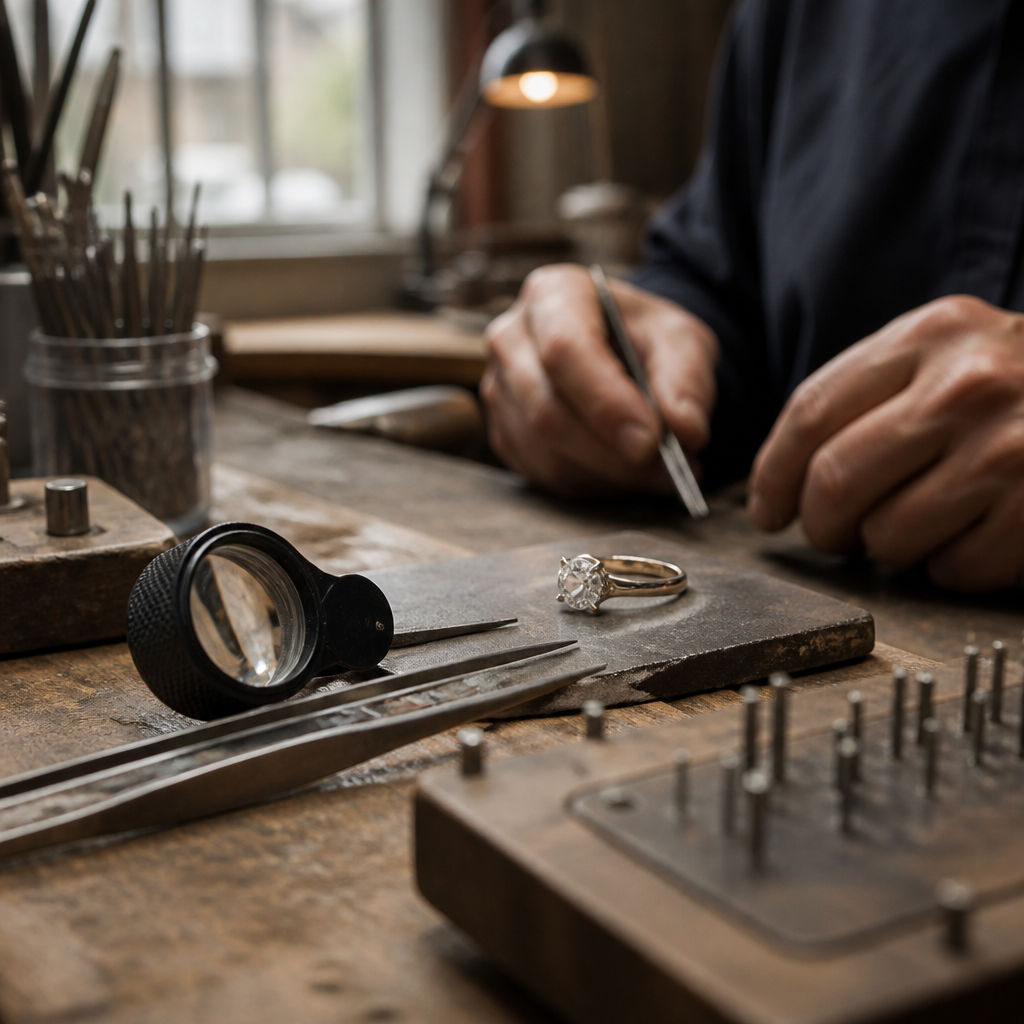
When you hold a stone under a jeweler's loupe, you can check some things yourself, but you cannot re-grade cut or color in a shop window. The report fills that gap. It is not a substitute for looking at the piece, but it is a fair starting point for any comparison.
Resale, insurance, and the paper trail
If you ever insure a ring or sell it, the people on the other side of the table will ask for documentation first. A report that matches the stone and the setting makes both conversations shorter. Without one, you may spend more time arguing about what the stone is than about what it is worth.
Keep the report with the receipt, and photograph the report number along with any inscription number on the stone. Those records together are what most appraisers and insurers will request first.
IGI vs GIA: How the Reports Differ
Most buyers meet two names at the jeweler's counter, IGI and GIA, and assume one is the stricter or more prestigious version of the other. The reality is more practical. Both laboratories use the 4Cs, and the question that matters is what each report says, how clearly it states the origin, and whether it matches the stone you are buying.
GIA's own explainer describes its work as examining diamonds, assessing their quality based on the 4Cs, and describing them. It also states that GIA does not certify diamonds or their value. That wording is worth noticing, because a GIA report is a detailed description of a stone, while IGI's diamond service is presented as certification. Neither label tells you what you will pay or what the stone will resell for.
Where the paperwork differs in practice
The biggest practical difference is that GIA grading reports are issued for unmounted stones, according to its own FAQ. If you want a GIA report, you generally need the loose diamond before it goes into a setting. That changes how a jeweler sources and handles the stone, so ask early if a GIA report is important to you.
For a lab created stone, the comparison still comes down to the document. Check that the report states the origin, lists the weight and measurements, and includes a report number you can confirm directly with the issuing laboratory.
Choosing a document, not a logo
Do not pay a premium because a logo looks more familiar. A well documented IGI report can be more useful to you than a poorly matched GIA report, and the reverse is also true. Read the report, compare its numbers to the listing, and check them against the stone in your hand.
The table below compares the three documentation options buyers encounter most often. Each one answers a different question, which is why the choice should depend on what you plan to do with the stone.
| Documentation option | What it documents | Where it falls short |
|---|---|---|
| IGI grading report | Cut, color, clarity, carat weight, and origin screening for the stone | Does not set a market value and does not judge the metal or setting quality |
| GIA grading report on a loose stone | A detailed description of the 4Cs for an unmounted diamond | Usually requested before setting, so it is harder to add to a finished ring |
| Seller-issued grading sheet | The seller's own summary of the stone's specifications | Not independent, so it cannot replace a third-party report |
Certified Diamond Studs: What to Check
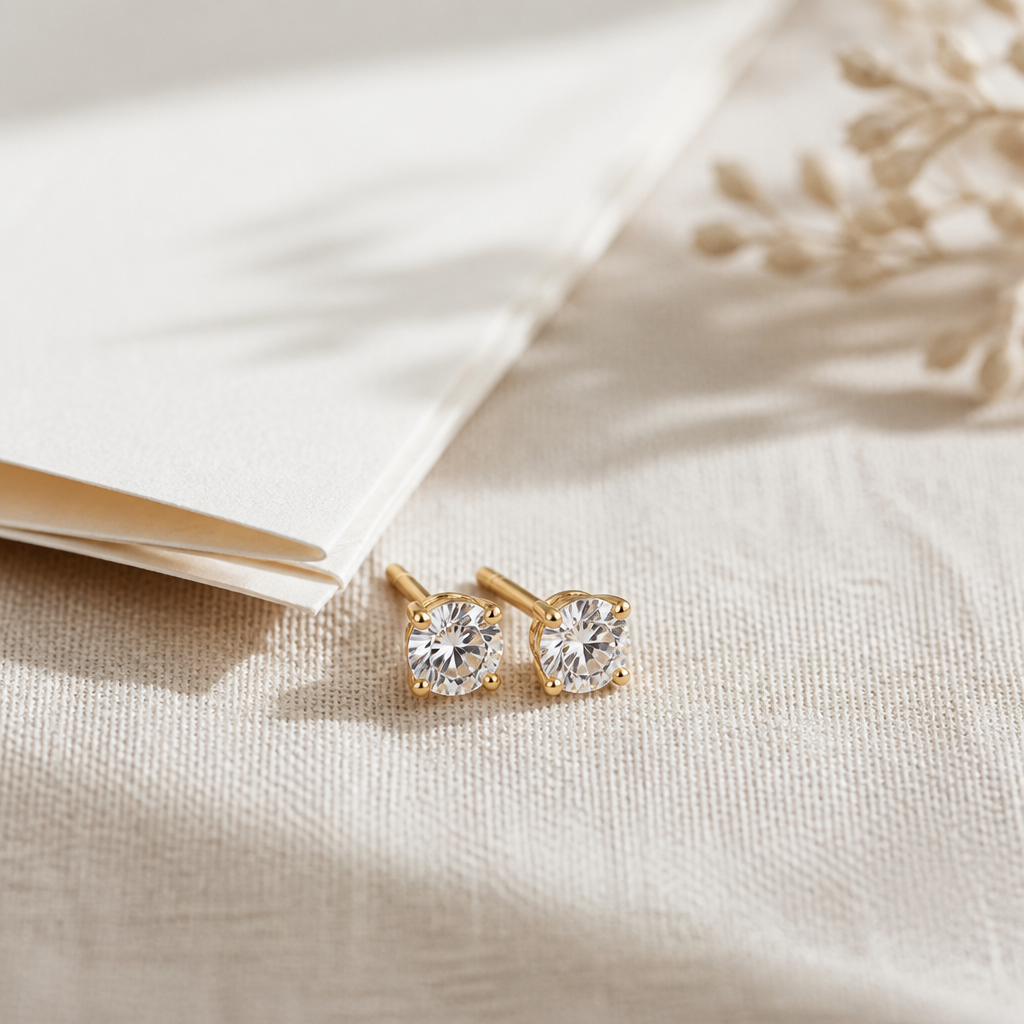
Diamond studs are among the most closely inspected pieces in a jewelry box, because two small stones sit side by side and any mismatch shows at arm's length. That makes certified diamond studs one of the clearest places to rely on an IGI report. Our IGI certified studs are set in solid 14k gold with brilliant lab created diamonds, so the paperwork needs to cover both stones, not just one.
Matching the report to a pair
Ask whether the report covers each stone individually, and whether the two stones were chosen to match. Two stones with the same carat weight but different color can look mismatched in certain lights, even when each report is accurate on its own. A practical test is to compare the two reports side by side and confirm that color, clarity, and cut are close.
Ask for the report numbers for both stones, and keep them with your receipt. That way, a jeweler servicing the earrings later can confirm which stones they hold.
Checking the metal and the backs
A certificate covers the diamond, not the post, the back, or the gold alloy holding it. Look for a clear 14k stamp on the metal, and check that the invoice describes solid 14k gold rather than plated or vermeil. For studs you will wear daily, the backs deserve as much attention as the stone, because a loose back is one of the most common ways a stud goes missing.
Pro tip: Photograph the report numbers, the stone measurements, and the 14k stamp before you wear the studs for the first time. If the stamp is faint, a jeweler can confirm it, and you will have a record that matches the paperwork.
Common Mistakes With Diamond Certificates
The most frequent mistake is treating a certificate as a price tag. A report describes the stone, but it does not tell you what the market will pay. Two stones with identical grades can sell for very different amounts depending on demand, setting, and seller.
A certificate proves what was measured on a specific day. It proves nothing about your ring until the report number, the stone, and the invoice all point to the same piece.
Treating a report as a valuation
Use the report to compare stones on equal terms, and use a separate appraisal to set a replacement value. Mixing those two jobs leads to overinsurance on one piece and underinsurance on another. A report that matches the stone is the foundation, but it is not the number your insurer will use.
Assuming a copy of the report matches the stone
Screenshots and emailed PDFs are easy to alter, and a report that does not match the stone is useless. Confirm the report number with the issuing laboratory, and check the stone's measurements and inscription against the document when the piece arrives. If anything differs, the paperwork is not verifying the diamond you are holding.
Skipping verification until the return window closes
Many buyers check paperwork only when they want to sell or insure the piece, and by then return and exchange windows may have passed. Check the report on delivery, while you still have time to act. This simple habit prevents the most expensive surprises.
Certification and Custom Pieces
Custom work changes the certification question. When a jeweler builds a setting around a specific stone, the head design, prong height, and overall proportions must suit the stone's actual dimensions. That means the report should be in hand before the metal is shaped. We design and produce custom engagement rings and custom wedding bands in-house, and the process works best when the stone's documentation comes first.
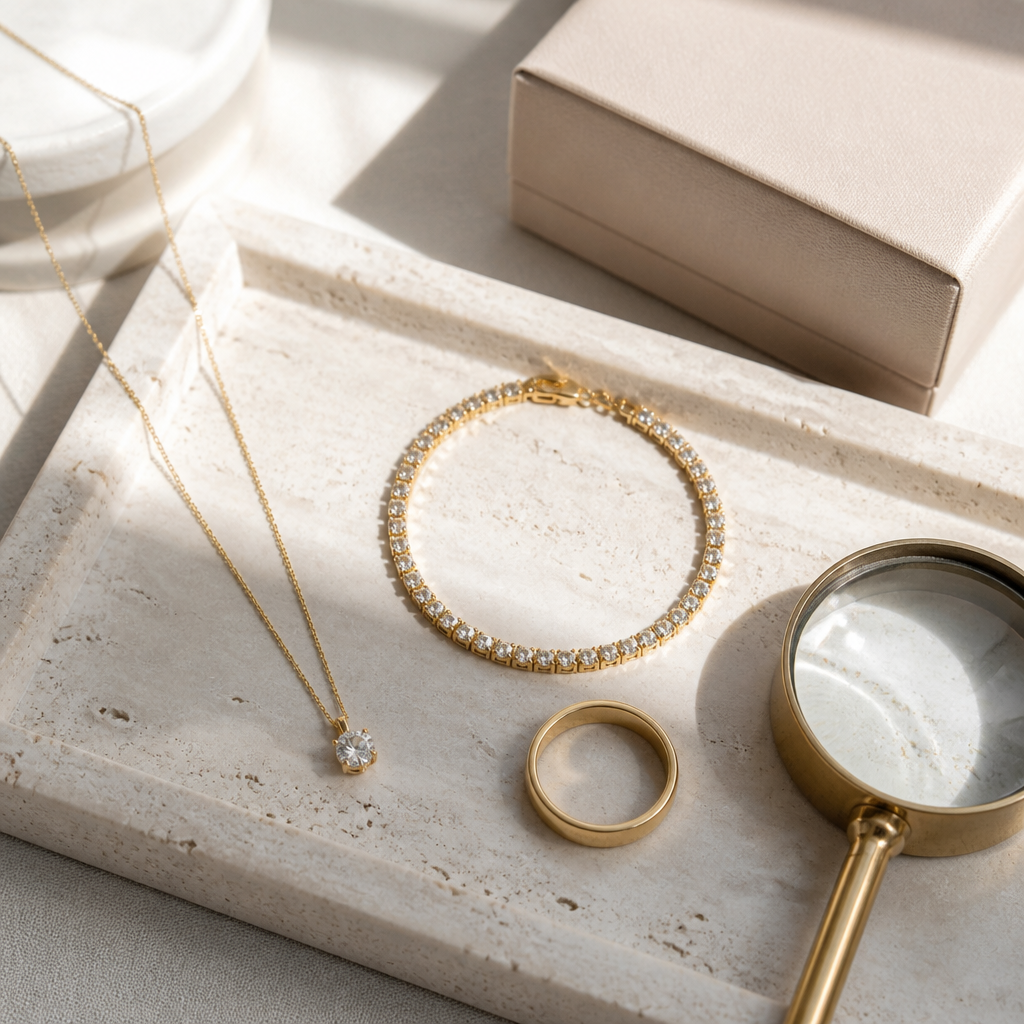
Ordering a custom setting around a certified center stone
Send the report, and any measurements it lists, to your jeweler before the design is finalized. A setting drawn for a stone that is slightly off from its listed dimensions can sit poorly, and that affects both appearance and security. Confirm that the weight and measurements match the report so the mounting fits the diamond you actually have.
If you plan to use a lab created center stone, ask that the origin appear on the paperwork that accompanies the finished piece. That single line keeps your records consistent if the ring is appraised later.
Documenting the metal and the craftsmanship
Precision metal work is a separate subject from grading, and a diamond report cannot judge it. Ask for the gold karat, the finish, and any stamp or hallmark in writing, and keep photos of the piece from the top and side. These details matter if a prong needs retipping years after purchase.
Pro tip: Before a custom setting is cast, ask the jeweler to confirm the girdle thickness and table size against your report. Matching those numbers early can save a costly remake if the stone differs slightly from the sketch.
Frequently Asked Questions
Is an IGI certificate the same as an appraisal?
No. An IGI report describes the diamond's cut, color, clarity, carat weight, and origin, while an appraisal estimates value for a specific purpose such as insurance or replacement. Many owners need both for a complete record of a ring.
Does IGI certify lab created diamonds?
Yes, IGI grades lab created diamonds, and our IGI certified studs are one example of that paperwork in practice. Confirm that the report states the origin clearly, because that detail determines how the stone should be described to anyone who asks later.
Is a GIA report better than an IGI report?
Neither is better by default. Both use the 4Cs, and the more useful question is whether the report matches the stone and clearly states what was examined. If you want a GIA report, plan for it on a loose stone before setting.
How can I check that a report number is genuine?
Contact the issuing laboratory directly using the contact details on its official website, and provide the report number along with the stone's weight and measurements. Do not rely on a copy from the seller alone, since that is the one document you cannot independently confirm.
Do small diamonds need a certificate?
Not every piece needs one, but a certificate becomes more useful as the stone's value rises or the piece becomes harder to compare. For diamond studs and engagement rings, most buyers want the paper trail even when the stones are modest in size.
Does a diamond certificate cover the setting?
No. The report covers the diamond, not the metal, prongs, or finish of the setting. Check the gold stamp, the backs, and the overall construction separately.
We would like to hear whether your certificate matched the stone you received, so please share your experience in the comments.
References

- Choosing a selection results in a full page refresh.
- Opens in a new window.