


Diamond Shapes Guide: Round, Princess or Oval Explained
Ask ten people to describe a diamond shape and you will hear ten different answers, and most of them will mix up shape with cut. That confusion costs real money. A buyer who falls for a stone seen only in a flat photo can end up with something that looks nothing like the picture. This diamond shapes guide cuts through the noise. We will explain what shape actually means, where the round brilliant, princess cut, and oval diamond each earn their place, and how to choose an engagement ring diamond shape you will still love in twenty years. The advice comes from a family-owned New York workshop that designs and sets every piece in-house.
Table of Contents
- Quick Takeaways
- Shape Versus Cut Style: Why the Difference Matters
- The Round Brilliant Diamond
- The Princess Cut Diamond
- The Oval Diamond Ring
- Round, Princess, and Oval Side by Side
- Matching the Shape to the Setting
- Shape Choices Beyond the Engagement Ring
- Frequently Asked Questions
- References
Quick Takeaways
| Key Insight | Explanation |
|---|---|
| Shape and cut are different decisions | Shape is the outline seen from above. Cut style is the facet pattern inside the stone. Ask for both when you compare listings. |
| Round brilliants are the most forgiving shape to set | Almost any setting style works with a round, which makes it the easiest choice for a custom design that may change during planning. |
| Princess cut corners need protection | The four pointed corners are the most likely place to chip. Choose a setting with a protective prong or bezel at each corner. |
| Ovals can look larger than their carat weight | An elongated outline spreads weight across the face, so an oval often looks bigger face up than a round of the same weight. |
| Check the bow tie on ovals | The bow tie is a dark shadow across the center of some oval stones. Judge it in person or in a face-up photo under the same light. |
| Match the shape to the setting and lifestyle | Active wearers often prefer rounds or compact shapes with strong corner protection. Elongated shapes suit people who want a dramatic, long-looking hand. |
Shape Versus Cut Style: Why the Difference Matters
Shape is the outline of the diamond when you look at it from above. Round, oval, princess, pear, cushion, and emerald are all shapes. Cut style is different. It describes how the facets, the small flat surfaces polished into the stone, are arranged and angled, and that arrangement controls how light moves through the diamond.

This distinction matters when you start comparing stones. Two diamonds can share an oval outline and still look nothing alike, because one has a crisp facet pattern and the other looks soft and hazy. A listing that says "princess cut" tells you the outline is square, but it does not tell you how much brilliance to expect. In practice, the better question is not "Which shape do I like?" but "Which shape and facet pattern do I like?"
Some terms carry both meanings. The princess cut is a square outline with a defined faceting pattern, so it is both a shape and a cut. The Gemological Institute of America notes that a standard round brilliant has exactly 57 or 58 facets, which is why it is treated as a tightly defined style. Oval, pear, marquise, and heart stones are looser. They can be faceted in many different arrangements, so two ovals of the same carat weight can perform differently.
Pro tip: When you compare two stones, request face-up photos taken under the same lighting. Outline and spread are much easier to judge side by side than one stone at a time.
The Round Brilliant Diamond
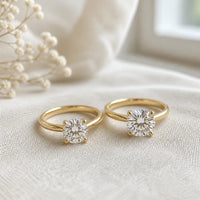
The round brilliant is the shape most people picture first, and it has held that position for good reason. Its facet pattern is the most studied in the industry, and it returns light evenly from every angle. A well-cut round looks lively even in a simple setting, which is why it is the default in most jewelry collections.
Why a Round Looks Smaller Than Its Carat Weight
A round spreads its weight through the depth of the stone rather than across a wide face. Compared with an oval or cushion of the same carat weight, a round usually looks slightly smaller when worn. If you want the most visible surface for your budget, a round needs a little more carat weight to make the same impression.
That trade-off works in your favor on a tight budget. You can buy a slightly smaller round, put more of the spend into cut quality, and still have a stone that looks bright on the hand. We see this choice often in custom engagement rings where the customer wants maximum sparkle per dollar.
Where the Round Brilliant Can Disappoint
The round is forgiving to shop for but unforgiving to cut badly. Because the facet pattern is so precise, poor proportions show up quickly as a dull center or a dark patch that does not return light. Outline alone tells you almost nothing about performance, so the cut quality deserves more of your attention than the shape label.
For a round, the cut matters more than the shape name. A poorly proportioned round will look flat no matter how expensive the setting is.
Pro tip: Rounds are the easiest shape to adapt. Almost any setting, from a classic six-prong head to a low-profile bezel, works with a round, so it is the safest choice if the design may change during planning.
The Princess Cut Diamond
The princess cut is the most popular fancy shape for engagement rings. It is square with pointed corners, and it is a brilliant cut, so it sparkles strongly. Its look is more geometric and modern than the round, which appeals to buyers who want a ring that feels contemporary rather than traditional.
The Corners Are the Weak Point
The four corners are the most vulnerable part of a princess cut. A sharp corner that takes a knock can chip, and that damage is permanent until the stone is recut or replaced. This is the single most important practical point for anyone who wears a ring every day, works with their hands, or plans to wear it for decades.
Setting choices make a real difference. We recommend protective prongs or a bezel at each corner, and we check the prong placement on every princess stone before a ring leaves the bench. A ring that looks slightly bulkier at the corners is usually the more durable choice.
How a Princess Cut Shows Its Size
A princess cut often looks larger face up than its carat weight suggests, because its square outline covers a lot of the stone's surface. That makes it a strong value option for buyers who want visible size without moving into a much higher carat price bracket. The flip side is that the sparkle is contained within sharp lines, so a well-cut princess looks crisp rather than soft.
Pro tip: Ask for a setting with extra metal around each corner. It adds a little to the profile of the ring but meaningfully reduces the risk of a chipped tip after years of wear.
The Oval Diamond Ring
The oval diamond blends the brilliance of a round with an elongated outline that many people find flattering on the hand. It draws the eye along the length of the finger, which is why it is a favorite for buyers who want a ring that looks distinctive without being overly bold.

Choosing the Right Length
Not every oval is equally flattering. A very long oval can look narrow and thin on some hands, while a moderately elongated oval tends to look balanced and elegant. Judge the proportions by looking at the stone face up, not only by the length number in a listing, because a stone's outline is what your eye actually sees.
Reading the Bow Tie
The bow tie is a dark shadow that can cross the center of an oval stone. Some facet patterns show it more than others, and it can make a stone look like it has a hole in the middle. Because this depends on the cut rather than the outline, you cannot rely on the shape name alone. Check the stone face up under the same lighting as any other option you are considering.
Pro tip: Set an oval so the long axis matches the direction of your finger, and check that the setting does not shade the stone's ends. A slightly wider head usually protects the points better than a tight setting.
Round, Princess, and Oval Side by Side
The three shapes solve different problems. The round is the most versatile and the easiest to protect, the princess gives the most visible size for the money if the corners are well guarded, and the oval offers a distinctive silhouette with a bit more presence on the hand. The table below sums up where each one earns its place.
| Shape | Where It Shines | Where It Can Disappoint |
|---|---|---|
| Round brilliant | Maximum brilliance, easy to set in almost any design, and a timeless look for everyday wear | Can look smaller than the same carat weight in other shapes, and a poorly cut stone looks dull quickly |
| Princess cut | Modern, geometric sparkle with strong visible size for the carat weight | Corners are vulnerable to chipping, so the setting must protect them |
| Oval | Elongated outline that flatters the hand and looks larger face up | Bow tie shadow varies by cut, and very long proportions can look narrow |
For most buyers, the decision comes down to two questions. First, how much daily wear will the ring see? Second, do you want the ring to look classic, modern, or distinctive? Answering those two questions usually narrows the field to one shape within a few minutes of looking at stones.
Matching the Shape to the Setting
The shape of the diamond should guide the setting, not the other way around. A decision about the head style, the number of prongs, and the band profile changes how the stone reads, and that matters as much as the outline itself. Our workshop sets every shape in solid 14k gold, and we start with the prong layout for each new stone.
Solitaire, Halo, and Pavé Options
A solitaire lets the stone carry the whole design, and it suits a round especially well because the symmetry is easy to appreciate. A halo of smaller stones adds visual size and works well around an oval or princess, where the outline gives the halo a clear shape to follow. Pavé along the band is a useful choice when you want more sparkle without enlarging the center stone.
Band Profiles for Each Shape
A slim band keeps the attention on a round or oval head. A slightly wider band can balance a princess cut, because the square outline needs a bit more metal to look settled on the finger. Matching the band width to the diamond's footprint is one of the simplest ways to make a ring look professionally designed.
Shape Choices Beyond the Engagement Ring
Diamond shape matters across more than engagement rings. Many couples choose a matching wedding band, and the shape of the center stone can guide that decision. A round center often pairs naturally with a clean, plain band, while a princess or oval center may suit a band with a subtle detail that echoes its outline.

Shape also helps with the rest of a jewelry wardrobe. Round diamond stud earrings are the classic starting point because they suit almost every outfit and face shape. A solitaire pendant in a round cut works well as a gift, and a tennis bracelet is usually set with rounds because the repeating pattern looks cleanest with a single shape. Keeping shapes consistent across a set creates a coordinated look that feels intentional.
Pro tip: If you are building a set, choose the engagement ring shape first and let the studs and pendant follow it. Matching shapes across pieces looks deliberate, while mixing too many shapes can make a collection feel scattered.
Frequently Asked Questions
Which diamond shape is the best choice for an engagement ring?
There is no single best shape, but the round brilliant is the most versatile for everyday wear. It works with almost any setting and hides small knocks better than sharp-cornered shapes. If you want a distinctive look, an oval or princess cut is a strong choice, provided the setting protects the corners and the cut quality is high.
Is a princess cut less durable than a round?
A princess cut is more vulnerable at its corners, so it needs more careful setting. With protective prongs or a bezel, a well-set princess is a durable everyday ring. A round is simply easier to protect because it has no sharp corners to chip.
Why does an oval diamond sometimes look smaller or larger than expected?
An oval's elongated outline spreads its weight across a wider face, so it often looks larger than a round of the same carat weight. However, very long proportions can look narrow on some hands, and the bow tie can make the center look dark. Always check the stone face up before deciding on size.
Does diamond shape affect the price?
Shape can influence price, but cut quality and carat weight usually matter more for how the stone looks. Because our rings use lab created diamonds, you can focus on shape and setting without the price being driven by mined-stone scarcity. Compare stones on outline, facet quality, and visible size rather than on shape alone.
Can I choose a shape that is different from the one I see most often?
Yes, and many buyers do. Less common shapes such as cushion, pear, or emerald can look distinctive while still suiting a modern design. The key is to view the stone face up and confirm that the cut delivers the brilliance you want, since unusual shapes depend heavily on their facet pattern.
Should I buy the diamond before choosing the setting?
It is usually better to choose the shape first, then select a setting that protects and showcases it. Once you know the outline, the head style, prong count, and band profile become much easier to decide. This sequence also helps when you are working on a custom design.
Which shape are you leaning toward, and what made you choose it? If you have already lived with a round, princess, or oval ring, we would love to hear what you learned from wearing it every day.
References
- Choosing a selection results in a full page refresh.
- Opens in a new window.