


Bridal Jewelry Sets: Matching Ring, Earrings and Necklace
Most brides don't realize their ring, earrings, and necklace are being judged together until the photos come back. A ring that looks delicate beside statement studs, or a pendant that fights with the neckline, can make even expensive jewelry look like it was chosen in separate shops. Bridal jewelry sets work best when you plan them as one composition. This guide walks through how to match your engagement ring, earrings, and necklace so the three pieces look intentional on the day and still feel like you after the wedding.
Table of Contents
- Quick Takeaways
- Why Bridal Jewelry Sets Work Better as a Plan
- Choosing the Ring as Your Anchor
- Matching Earrings to Your Ring
- The Necklace That Completes the Look
- Comparing Three Ways to Build a Bridal Set
- Keeping Metal and Stones Consistent
- Buying a Set Without Overspending
- Frequently Asked Questions
- References
Quick Takeaways
| Key Insight | Explanation |
|---|---|
| Pick the ring first | The engagement ring sets the metal color, visual weight, and style language. Match the earrings and necklace to it. |
| Keep the metal consistent | Use one metal family, such as solid 14k yellow, white, or rose gold, across all three pieces unless you deliberately mix them. |
| Scale earrings to the ring | Studs should register at a short distance but never compete with the center stone. |
| Let the neckline choose the necklace | A solitaire pendant suits V-necks and scoop necks. High collars usually call for a shorter chain or a lighter piece. |
| Match the stone shape | Round brilliants repeat well across ring, studs, and pendant. Mixing shapes only works with one clear anchor piece. |
| Buy in a protective order | Ring first, studs second, necklace last, so each purchase is made against a settled reference. |
Why Bridal Jewelry Sets Work Better as a Plan
A bridal set is not three purchases that happen to share a box. It is one visual argument made across your hands, ears, and neckline, and it either reads as deliberate or as a collection of pieces picked on different days. Most of the difference comes from decisions made before you ever see a stone.
Plan the set in the order you will wear it. The ring is the most visible piece in every photo, so it becomes the reference point for metal color, stone shape, and overall weight. Earrings and a necklace then answer to that reference rather than competing with it.
What Coordinated Actually Means
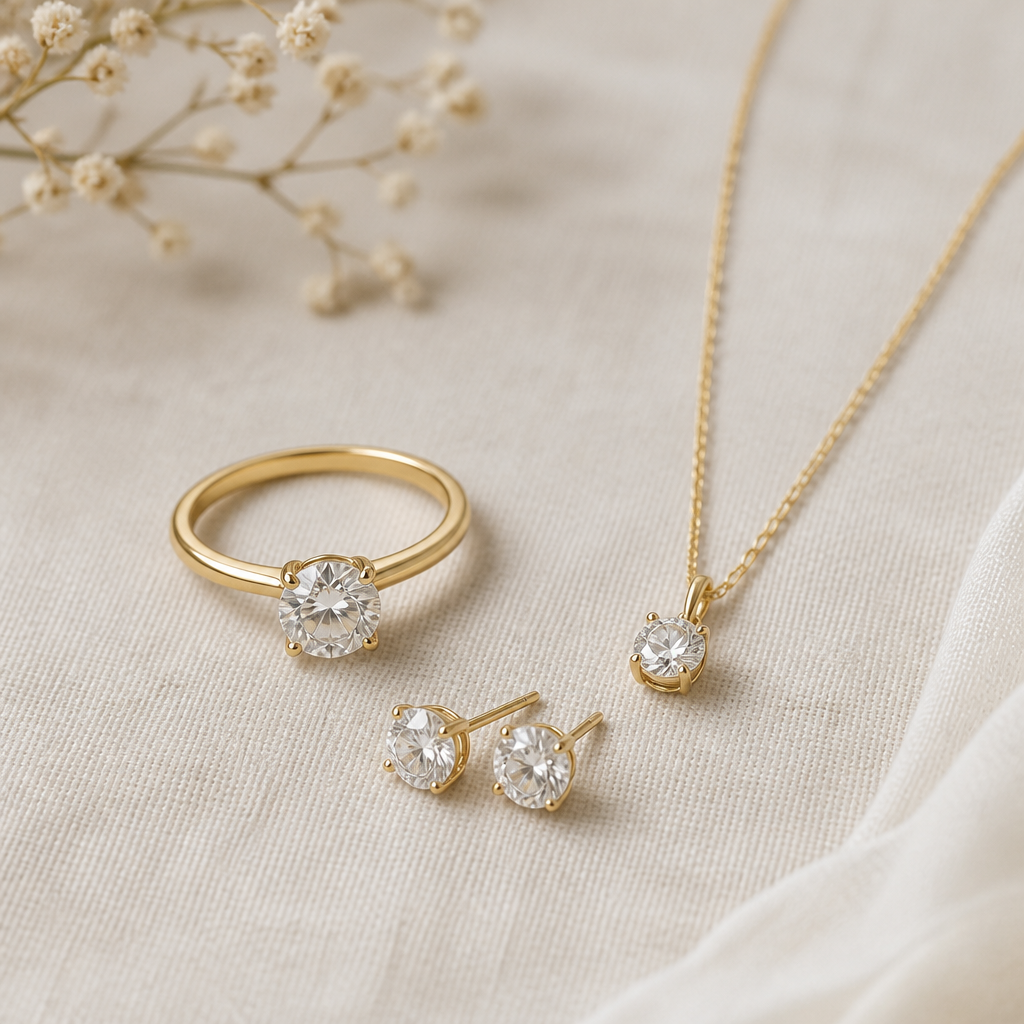
Coordinated does not mean identical. Matching a bridal set means repeating two or three deliberate elements, usually the metal, the stone shape, and a shared level of polish or detail. A plain polished band with a delicate pavé pendant and simple studs can look more cohesive than three pieces that all carry heavy ornamentation.
In practice, I ask clients to name the one feeling the set should give: quiet, bold, vintage, or modern. That single word settles most of the choices that follow, from whether the earrings should be bezel set to whether the necklace should have a visible chain.
Where Sets Usually Go Wrong
The most common mistake is buying the earrings and necklace from a different source after the ring, with no reference to its metal tone. Yellow gold beside white gold, or a warm rose tone beside a cool white finish, is the first thing a camera catches and the last thing a couple notices in the moment.
Online shopping makes this easier to get wrong. A Brides guide to the best places to buy wedding bands online sorts sellers into big-name retailers, classic brands, and independent designers, which shows how wide and uneven the market is. Browsing marketplace listings for gold bridal set earring and necklace bundles, the displayed prices ran from roughly $30 to $95 on a single results page. Listings like these are not standardized, so you have to verify the metal, the stone specifications, and the finish yourself.
Pro tip: Photograph your ring in natural daylight before ordering earrings or a necklace. Use that image as your color reference when you compare metal tones on screen.
Choosing the Ring as Your Anchor
Your engagement ring sets the rules for everything else. If the ring is a solid 14k gold band with a single lab created diamond in a prong setting, the earrings and necklace should share that restraint. If the ring is a dense pavé design, a simple stud and a fine chain will look better than a second wave of sparkle.
Start by deciding whether the ring is the loudest piece in the set. That answer determines how much visual weight the supporting pieces can carry without crowding the hand.
Setting Style and Profile Height
A high solitaire prong setting reads as a statement, and it pairs best with understated studs that sit close to the ear. A low bezel or flush setting is quieter, which gives you more freedom. Look at how the ring sits on the finger in a close-up photo, because the setting shape often shows up more clearly there than in a showroom.
Custom engagement rings deserve extra attention here. When a ring is designed around a specific stone and profile, the matching pieces should echo one detail from it, such as the same prong count, the same milgrain edge, or the same gallery line, rather than copying the whole design.
Metal Color as the First Filter
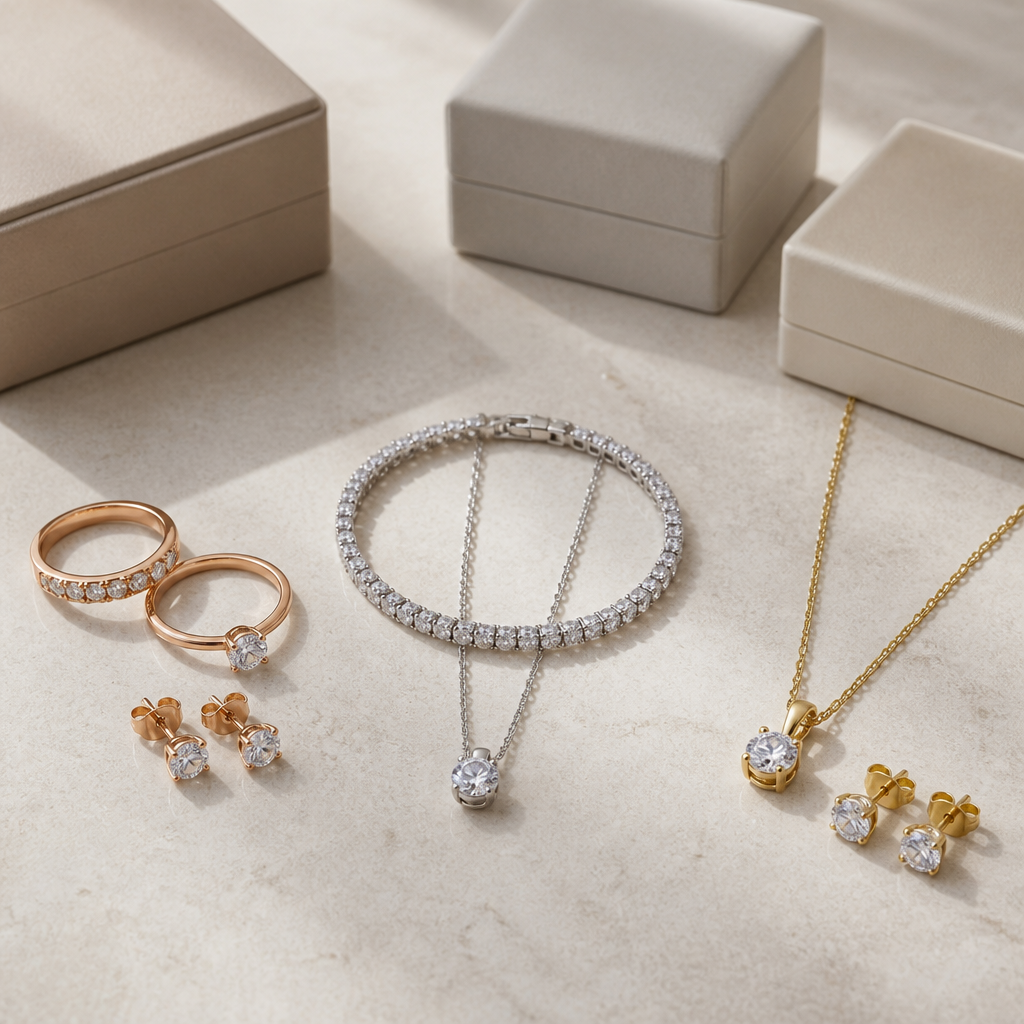
Settle the metal before anything else. Solid 14k yellow, white, and rose gold each read differently under warm and cool light, so the same color should appear across all three pieces. If you want a mix, keep it to one deliberate contrast, such as a yellow gold ring with white gold studs, and repeat that contrast nowhere else.
Skipping this step is the most expensive mistake in this category, because it often means buying a second pair of earrings after the first pair looks wrong against the band.
Matching Earrings to Your Ring
Earrings do the most visible work in a bridal set because they sit beside the face in almost every portrait. Their job is to frame the ring and the neckline without pulling focus. A good rule is that the stud should be large enough to register at a short distance, but never so large that it competes with the center stone.
Earrings also have to read well on their own, since they are often worn without a necklace during the ceremony and reception.
Scaling Studs to the Center Stone
When the ring has a prominent center stone, choose studs that echo its shape and sit a step smaller. Round brilliant studs repeat well with a round center stone and almost always look correct. If the ring is a cushion cut, a round stud still works, but a cushion-cut stud can feel too literal unless the ring is very simple.
Studs should also suit your ear shape and lobe. Heavier drop earrings are a different category, and they usually suit a bride with an updo or a dramatic neckline more than a relaxed, everyday ceremony look.
Lab Created Diamond and IGI Certified Studs
Our studs use brilliant lab created diamonds set in solid 14k gold, and IGI certified studs are also available. Certification matters most when you want documentation for insurance, resale, or a future appraisal, and it lets you compare stones on paper rather than relying on a description alone. Ask for the grading report, check that the stated carat weight matches the stud you are buying, and confirm the metal stamp matches the ring.
Pro tip: Wear the earrings with the ring on your hand for a full minute before deciding. Studs can look correct in a display case and then feel oversized once they sit beside your actual band.
The Necklace That Completes the Look
The necklace is the last piece to be chosen, and it is the one most likely to be bought in a rush. It should sit where the neckline asks for it, not where it looks prettiest in a flat product photo. Start with the dress before you open a single product page.
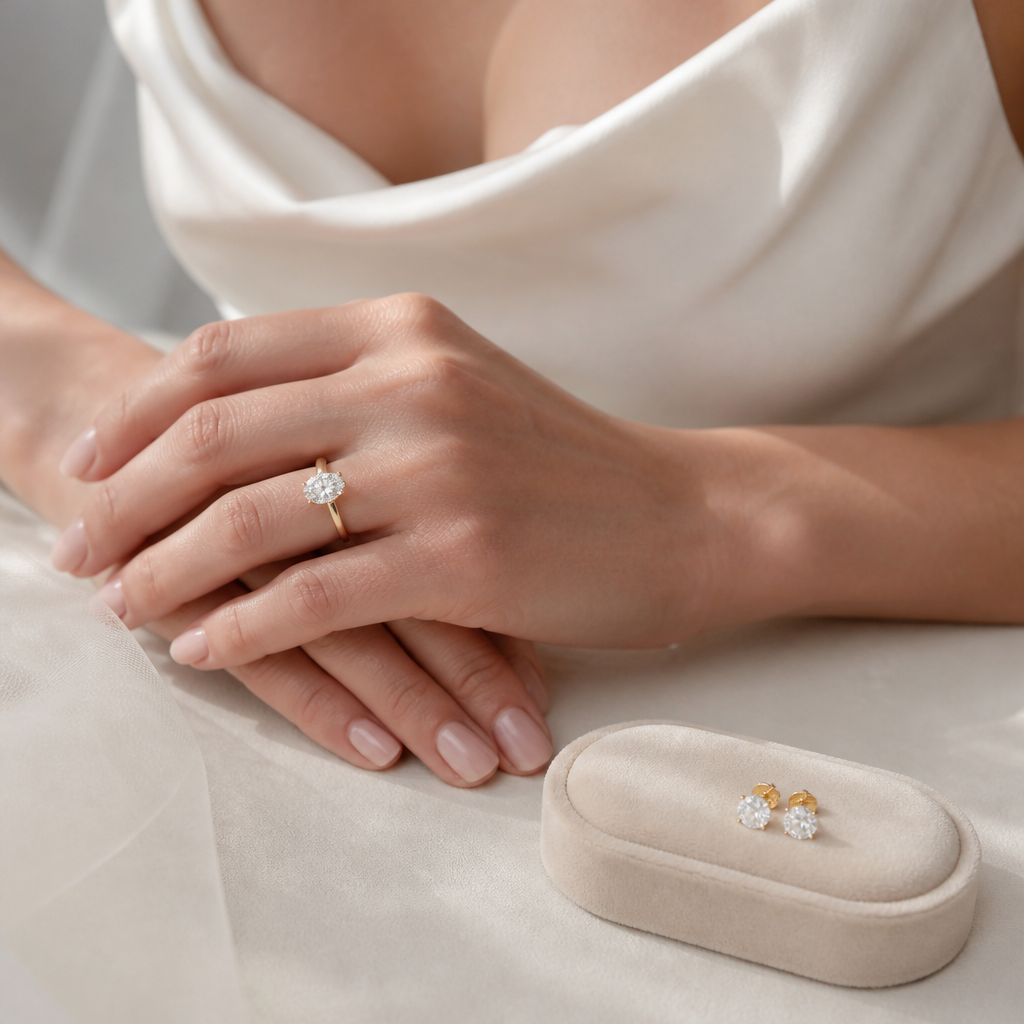
A solitaire necklace or pendant is the most versatile choice in a bridal set because it repeats the center stone and asks very little of the rest of the outfit.
Reading the Neckline
A V-neck or sweetheart neckline frames a pendant beautifully, especially when the pendant sits just above the point of the bodice. A scoop neck works with a slightly longer chain. A high collar or lace neckline usually calls for a shorter chain or a lighter piece, because anything substantial can disappear into fabric or clash with the texture.
Check the chain length against your actual neckline before you buy. A length that looks right on a display stand can sit too low once the dress is on, and most brides only notice at the first fitting.
Solitaire Pendant or Solitaire Necklace
A solitaire pendant on a fine chain is the cleanest option, because it repeats the ring's stone in a lower-key form. A solitaire necklace with a more substantial setting carries more weight and suits a bride who wants jewelry as a focal point. Both work, but do not wear both at once unless the necklace is clearly the secondary piece.
Our solitaire pendants and solitaire necklaces are built in solid 14k gold, which keeps the metal consistent with the ring and earrings across the whole set.
Comparing Three Ways to Build a Bridal Set
Most couples build a set in one of three ways, and each suits a different budget and timeline. Knowing which approach you are taking helps you avoid buying a piece that does not fit the plan.
The table below compares the three routes on the factors that matter most in practice: how consistent the metal will be, how much room you have to mix styles, and how much planning the process demands.
| Build Approach | Best For | Main Trade-off |
|---|---|---|
| Coordinated collection set | Couples who want one metal, one finish, and minimal guesswork | Less room to mix styles across categories |
| Ring first, matched pieces later | Couples spreading the budget over several months | Requires careful notes on metal tone and setting style |
| Custom set designed together | Couples with a specific design idea or a stone with family meaning | Longer production time and a higher upfront commitment |
The ring-first route is the most common, and it works well when the ring has a distinctive detail to echo. The custom route is the most precise, but it asks you to decide on all three pieces before the first one is finished.
Keeping Metal and Stones Consistent
Consistency is the quiet test of a good set. Once the metal and stone quality line up, small differences in size and cut look intentional rather than accidental.
Check each piece under the same light before you commit, ideally daylight near a window. Artificial store lighting can hide a color shift that becomes obvious in outdoor photos.
Mixing Metals Without Looking Accidental
A mixed-metal set can work, but it needs a clear logic. Put the contrast in one place, such as a white gold pendant beside a yellow gold ring, and keep the earrings on one side of that contrast. Scattering three metal tones across the set is the mistake that reads as an accident.
Stone Quality and Color Matching
Brilliant lab created diamonds in the ring, studs, and pendant should look like they belong to the same family. A stone that appears warmer or cooler than its partner stands out in daylight, especially in close-up photos. Compare stones side by side and ask for specifications in writing before you buy.
The best bridal sets look designed together, even when they were bought over several months. Repeated details do that work, not the price tag.
Buying a Set Without Overspending
Budget decisions are easier when you know which piece does the most work. For most couples, that is the ring, followed by the studs, with the necklace as the most flexible purchase. The spending order matters because each later choice depends on the earlier ones.
Accessible luxury is realistic when a maker controls its own production. Because our pieces are designed and produced in-house in New York, we can offer solid 14k gold and lab created diamonds without the markups common in traditional retail, which lets you put more of the budget into the metal and stones you actually see.
Order of Purchase
Buy the ring first, then the studs, then the necklace. This sequence keeps the most important decision at the front and gives you a clear reference for each later choice. If the ring is a custom design, allow production time before you start shopping for earrings.
Where the Money Should Go
Spend on the parts of the set that touch the face and hands. Metal quality, stone quality, and secure settings matter more than a second statement piece you may wear only once. A pendant you wear every day often delivers more value than an extra showpiece that stays in the box.
Pro tip: Keep a note on your phone with the metal color, setting style, and stone size of your ring. That note will stop you from buying earrings or a chain that clashes with your band months later.
Frequently Asked Questions
Should the earrings match the engagement ring exactly?
No. Matching the metal and a shared shape is usually enough. Identical designs can look repetitive, while one shared element, such as the stone shape or the prong count, creates a more polished result.
Can I wear a necklace and earrings with a stacked wedding band?
Yes, but keep the necklace lighter when the ring stack is busy. A fine solitaire pendant or a delicate chain usually sits well beside stacked bands without creating a crowded look.
How many pieces should a bridal jewelry set include?
Three is a practical number: the engagement ring, a pair of earrings, and one necklace. Adding a bracelet or a second necklace can work, but each extra piece makes metal and style consistency harder to maintain.
Are lab created diamonds a good choice for a bridal set?
They can be, especially if you want brilliant stones that look consistent across several pieces at an accessible price. Ask for grading documentation and confirm the carat weight and metal stamp before you buy.
Should I buy the whole set at once or in stages?
Buying at once makes matching easier, but staging is common and works well if you record your ring's metal tone and setting style. Choose the staged route only if you keep those details on file.
Share your experience with us, including which piece gave you the most trouble when matching your own bridal set.
References
- Choosing a selection results in a full page refresh.
- Opens in a new window.