


How to Choose an Engagement Ring: A Complete Buyer's Guide
Most people who buy an engagement ring make the same three mistakes. They start with the stone instead of the budget, they shop on carat weight alone, and they pick a setting they have never seen on a hand. Learning how to choose an engagement ring is less about memorizing jargon and more about knowing which decisions change the way the ring looks and wears every day. This guide covers budget, the 4Cs, diamond shape, diamond origin, metal, sizing, and how to buy with confidence. We design and handcraft our rings in New York, so the advice below comes from the bench as much as from the sales floor.
Table of Contents
- Quick Takeaways
- Set a Realistic Budget
- Understanding the Four Cs
- Choosing a Diamond Shape
- Lab Created or Natural Diamonds
- Metal and Setting Choices
- Ring Size, Comfort, and Daily Wear
- Buying Safely and Custom Options
- Frequently Asked Questions
- References
Quick Takeaways
Key Insight |
Explanation |
|---|---|
Set the total budget first |
Choose a ceiling for the full ring, then fit the stone, metal, and setting inside it. Starting with the stone and hoping the money stretches usually shortchanges the setting. |
Prioritize cut over carat |
Cut controls brilliance. A well-cut smaller stone often looks brighter than a larger stone with weak proportions. |
Treat G as a practical color target |
G reads white to most eyes at a lower price than D to F. In yellow gold, a slightly warmer color grade can look fine. |
Check clarity by eye |
Look for an eye-clean stone, meaning no inclusions visible without magnification. Ask to see it face up before you buy. |
Ask for an independent grading report |
Request a report from a recognized lab such as GIA or IGI, then confirm the measurements and grades match the stone you are buying. |
Size with a real measurement |
Measure a ring that already fits on the same finger, then check the sizing chart. Knuckle size matters as much as the base finger. |
Confirm returns and resizing before paying |
Get the return window, resizing terms, and warranty coverage for prongs and stones in writing. |
Set a Realistic Budget
Budget is the first decision, and it should come before you look at a single stone. Pick a total number you can comfortably spend, then work backward from it. Buyers who start with the perfect stone and hope the money stretches often end up with a weaker setting or a smaller diamond than they expected.
Think of the ring as a bundle of costs: the center stone, the metal, the setting labor, and a matching wedding band if you plan to buy one. Custom work changes the balance. A handcrafted setting in solid 14k gold takes skilled hours, so it can be worth paying for design rather than the last few hundredths of a carat. Most of the visual impact comes from the setting and the cut, not from a number on a receipt.
Where the money should go first
Put the largest share of the budget into the diamond's cut and the metal quality, since those affect how the ring looks and holds up over decades. Carat weight is the figure people quote most often, and it is the easiest thing to overpay for. A stone that is slightly smaller but better cut will usually look more impressive on the hand.
Pro tip: Ask for a written breakdown of stone, metal, and labor costs before you commit. A clear quote makes it easy to trade a little carat weight for a better cut without guessing where the money went.
Planning for the wedding band
A band bought later can cost more than expected if the metal or profile does not match the engagement ring. If you plan to stack rings, budget for both pieces at the same time. You can also ask for a custom band shaped to sit flush against the engagement ring's setting, which avoids a gap and keeps the stack looking intentional.
Understanding the Four Cs
The diamond industry grades stones on four factors: cut, color, clarity, and carat weight. The GIA describes these as a framework for judging quality, rarity, and value, and the four interact. You do not need to memorize every grade, but you do need to know which factors change how the diamond looks when it sits on a finger.
Cut drives the sparkle
When people say "diamond cut," they often picture a shape like princess or cushion. Cut actually refers to how well the facets interact with light, based on proportion, symmetry, and polish. Cut grades apply to round diamonds, so fancy shapes are judged differently. For a round stone, aim for a very good or excellent cut grade.
A smaller stone with strong cut and modest color often looks brighter than a larger stone with better color and weaker proportions.
In practice, that means you should compare stones by how they return light, not by a single grade on a page. Ask to see the stone under a single light source, then turn it slowly. The pattern of bright and dark areas tells you more about the cut than the label does.
Color and the warm metal question
Color grades run from D, which is colorless, down through the yellowish range. Most buyers find G a practical target. It reads white to most eyes without the premium that D to F commands. If the stone will be set in yellow gold, the warmth of the metal can soften a slightly lower color grade, so you may be able to spend less without a visible downgrade.
Avoid the H to Z range for a white metal setting, since the yellow tint is easier to see against silver tones. The difference is subtle on paper but becomes obvious in certain lighting.
Clarity and what eye-clean actually means
The GIA clarity scale has six categories and eleven grades, from Flawless down to the included grades. Inclusions are natural features of most diamonds, and many are invisible without magnification. The practical target is an eye-clean stone, meaning nothing visible to the naked eye when the diamond is viewed normally. Many stones in the lower clarity grades are eye-clean, which can free up budget for a better cut.
Choosing a Diamond Shape
Shape is the first thing most people notice, and it is the one decision that is purely about taste. The round brilliant is the most common choice and the shape that uses the cut grading system described above, which makes it the easiest to compare across sellers. Other shapes can look larger than their carat weight suggests, which is useful when the budget is tight.
Round brilliant for classic sparkle
A round brilliant returns light evenly from every angle, so small color and clarity variations are harder to spot. Its symmetry also makes it the easiest shape to judge for cut quality. If your partner likes a timeless look that suits almost any band, start with a round stone and compare cut grades across several options.
Elongated shapes and the bow tie
Oval, pear, and marquise cuts can make the finger look longer, but they show color more easily than round stones, especially at the ends. Many elongated stones also show a dark shadow across the center, often called a bow tie. Some bow tie shadow is normal, but a heavy one can make the stone look flat, so check it in person before buying.
Pro tip: Hold a candidate stone near a window and rotate it slowly. The sparkle pattern will reveal problems with symmetry and proportion that a grade report cannot show.
Lab Created or Natural Diamonds
Lab-created diamonds have the same chemical composition, crystal structure, and optical properties as mined diamonds. The difference is how they form, and that affects price and resale value rather than how the ring looks on a hand. We set our engagement rings with lab-created diamonds in solid 14k gold, which lets us put more of the budget into cut quality and design.
Be clear about what you are buying. A lab-created stone and a natural stone with identical specifications will look the same to the eye, but they are valued differently in the resale market. If origin or resale value matters to your partner, a natural stone may be worth the premium. If you want the most size and cut quality for your money, a lab-created stone usually makes more sense.
Comparing your options
The table below sets out the three approaches we see most often when couples are deciding what to buy.
Option |
Best for |
Trade-off |
|---|---|---|
Lab-created diamond in solid 14k gold |
Buyers who want the most size and cut quality per dollar |
Resale value is typically lower than for natural stones of the same specifications |
Natural mined diamond |
Buyers who value natural origin and traditional resale |
Higher cost for similar cut, color, and clarity grades |
Colored gemstone center stone |
Buyers who want color, a distinct look, or a sentimental stone |
Hardness varies by stone, so softer gems need protective settings and more careful daily wear |
Questions to ask any seller about origin
Ask whether the stone is natural or lab-created, and make sure the answer appears in writing on the invoice. Ask for the grading report number so you can look up the stone's details independently. A seller who hesitates on either question is giving you useful information.
Metal and Setting Choices
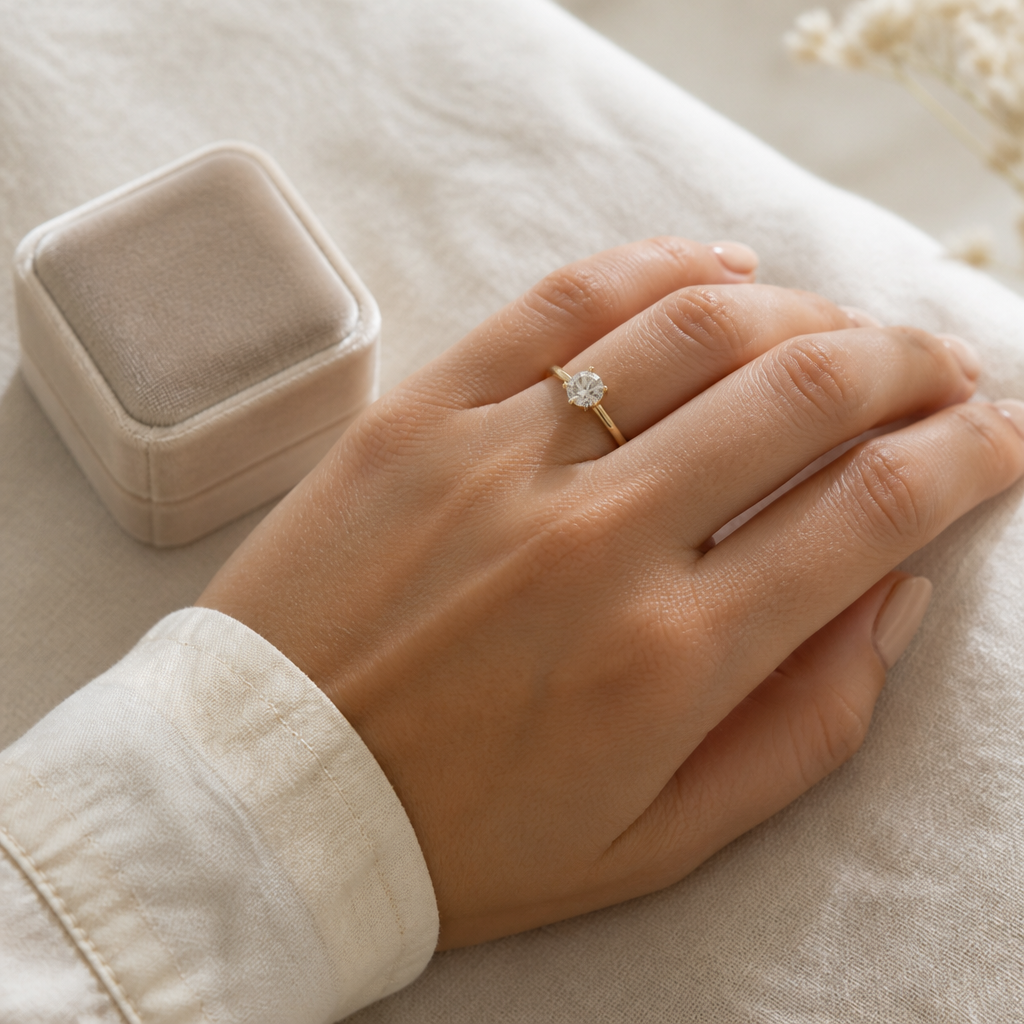
Metal and setting determine how the ring wears, how often it needs maintenance, and how well the stone stays protected. Solid 14k gold is our standard recommendation for everyday wear. It is firmer than higher karat gold, so prongs hold their shape better through daily knocks, and it still gives a rich gold color.
14k versus 18k gold
18k gold has a deeper color and more gold content, but it is softer and shows scratches sooner. That softness matters most in settings with thin prongs, where wear can loosen the stone over time. 14k holds a bright finish and handles the everyday activities most people do with their rings, from washing hands to typing at a keyboard.
Choose the metal color that suits your partner's skin tone and existing jewelry. Yellow, white, and rose gold all work with a well-cut diamond, so the decision should come down to personal taste rather than a rule.
Prongs, bezels, and halos
Four-prong settings show the most stone and let in the most light, but the prongs need periodic checks. A bezel wraps the stone in a continuous band of metal, which protects the edges and suits people with active jobs. A halo surrounds the center diamond with smaller stones, which adds visual size without adding carat weight, a useful trick when the budget is fixed.
Pro tip: Have your jeweler check prong tension and stone security at every service visit. Loose prongs are one of the most common reasons a center stone goes missing, and they are inexpensive to fix when caught early.
Ring Size, Comfort, and Daily Wear
A ring that is too tight or too loose is one of the easiest problems to avoid and one of the most annoying to fix. Sizing deserves more attention than most buyers give it, especially for a ring meant to be worn every day for decades. Measure carefully, and treat the measurement as the starting point for the final fit.
Measuring size the right way
Measure a ring your partner already wears on the same finger, then compare it against a printed sizing chart. Measure in the evening, when fingers are slightly larger, and avoid cold hands, which make the finger look smaller. Knuckles matter too. A ring that slides over the knuckle may need to be a half size larger than the base finger measurement suggests.
Matching the ring to daily life
If your partner works with her hands, keep the profile low and the setting secure. A low-profile band sits flatter, catches less on sleeves, and is less likely to rotate out of position. A higher setting with a delicate prong may look stunning in photos but can be a poor match for a daily routine.
Plan for soap, lotion, and the occasional bump against a doorframe. A ring worn daily should be designed for that wear from the start, not treated as a special-occasion piece that needs gentle handling.
Buying Safely and Custom Options
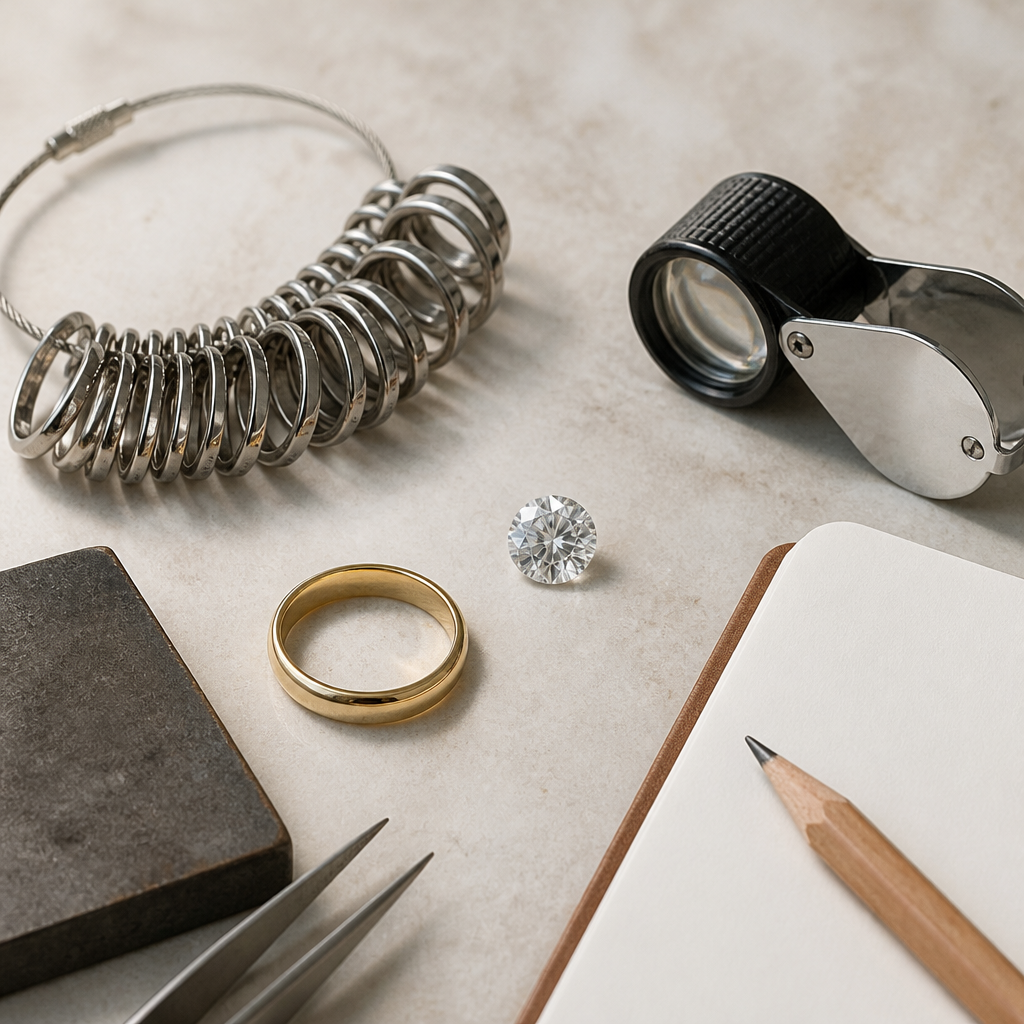
Buying a ring online or from a small workshop is a real option, but it calls for the same diligence as any high-value purchase. Ask what is in the box before you pay, not after the ring arrives. Look for a written specification sheet, an independent grading report, and a clear return and resizing policy.
What to request before paying
Ask for the stone's grading report, the metal's karat stamp, and the total carat weight, including any side stones. Confirm the warranty covers the prongs and the stone itself, and ask how long it lasts. A seller who answers these questions in writing has given you something you can hold them to later.
Custom engagement rings versus ready-made designs
A custom engagement ring lets you choose the stone, setting, and metal, then has it built to your specifications. The process takes longer, but the result reflects your partner's taste rather than a catalog's. Ready-made designs are faster and easier to compare side by side, which suits buyers who already know the look they want.
In our workshop, the best custom results start with a clear sketch or reference photo and a settled budget. Changing the center stone late in the process usually adds time as well as cost, so decide on the stone early and let the design follow from it.
Pro tip: Save reference photos of rings your partner has looked at for the longest time. Shape and metal color are easier to judge from a picture than from a written description.
Frequently Asked Questions
How much should I spend on an engagement ring?
There is no single right number. Set a total budget you can afford without debt, then divide it across the stone, setting, and metal. A well-cut stone in a solid gold setting usually matters more than reaching a specific carat weight.
Is a lab-created diamond a real diamond?
Yes. Lab-created diamonds share the same chemical composition, crystal structure, and optical properties as mined diamonds. The main differences are how they form and how they are valued when resold.
Which of the 4Cs matters most?
For most buyers, cut matters most because it controls brilliance. Color and clarity come next, and carat weight is the factor people most often overpay for.
What does eye-clean mean?
Eye-clean means no inclusions are visible to the naked eye when the stone is viewed normally. Many stones in the lower clarity grades are eye-clean, which can save money without a visible difference.
Is 14k gold strong enough for daily wear?
Yes. 14k gold contains more alloy than 18k, which makes it firmer and better suited to prongs and everyday contact. It still offers a warm gold color that many people prefer.
Should I ask my partner about her style before buying?
You can learn a lot from her existing jewelry, her saved photos, and the friends or family who know her taste. Asking her directly removes the risk of a ring she will not wear, but it also removes the surprise, so choose the approach that fits your relationship.
Tell us about your own experience choosing an engagement ring, and which step surprised you most.
References
- Choosing a selection results in a full page refresh.
- Opens in a new window.